Australian Prime Minister Anthony Albanese has faced renewed scrutiny over ministerial travel expenses, with questions about Sports and Communications Minister Anika Wells raising broader concerns about taxpayer-funded benefits, political accountability and the limits of existing parliamentary rules.
The controversy has centred on international flights, family travel to major sporting events and the use of travel entitlements intended to help parliamentarians maintain family connections while carrying out their duties. Although many of the arrangements were permitted under the rules in force at the time, the debate has increasingly focused on whether compliance alone is enough to satisfy public expectations.
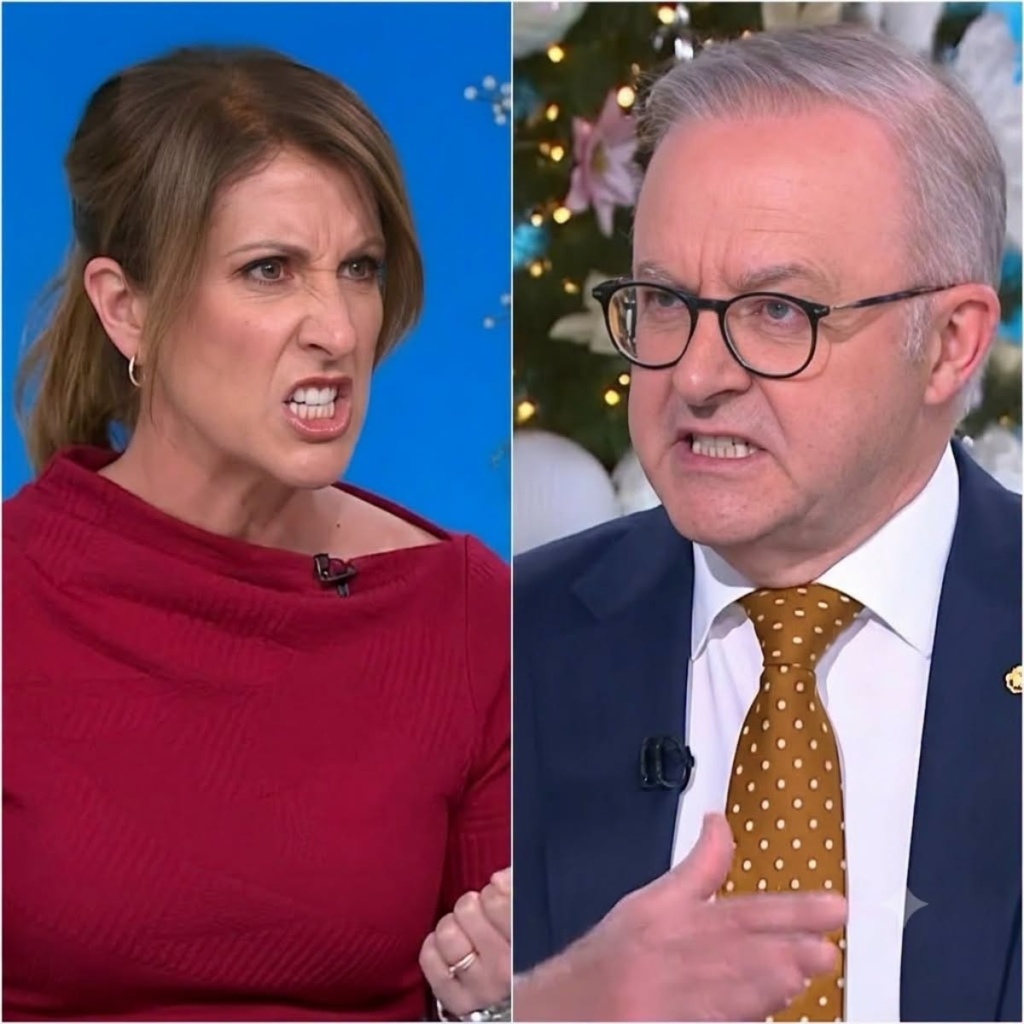
A televised interview with Sunrise host Nat Barr in December 2025 brought the issue into sharp focus. Barr challenged Albanese over the cost of Wells’ travel and questioned whether the expenditure represented an appropriate use of public money. The Prime Minister defended the role of independent oversight, arguing that decisions about parliamentary expenses should not be determined solely by the government.
The New York Trip That Triggered Questions
One of the most prominent issues involved Wells’ travel to New York for an international event connected to Australia’s social media restrictions for children under 16.
Documents obtained by the ABC through freedom-of-information requests showed that the final cost of Wells’ trip reached approximately $72,592.44, following changes to her itinerary. The wider travel arrangements also involved a departmental officer, whose costs were reported separately. Earlier estimates for flights involving the minister and accompanying personnel had attracted criticism because of their size.
During the Sunrise interview, Barr questioned whether the government should have considered sending fewer people or requiring some travellers to use less expensive flights.
Albanese responded that the event had been important to Australia’s policy objectives and argued that it had helped encourage international action on online safety. He also explained that changes to the travel arrangements had occurred after circumstances affected the original plan.
The exchange highlighted a recurring difficulty in evaluating official travel. Governments may argue that international representation is necessary to achieve policy objectives, while taxpayers may reasonably expect officials to demonstrate that the benefits justify the costs.
The central issue is not simply whether a trip took place for official reasons. It is whether the chosen arrangements represented reasonable value for money.
Family Travel and Major Sporting Events
Wells’ family travel entitlements also attracted attention after reports revealed that public funds had been used for family members to travel to major sporting events, including AFL grand finals.
According to The Guardian, Wells claimed more than $8,500 in family travel expenses for trips to Melbourne coinciding with AFL grand final weekends in 2022, 2023 and 2024. She had also declared receiving complimentary tickets to the matches from the Australian Football League.
Wells defended her use of parliamentary travel entitlements, arguing that the rules were established under a previous government and applied to parliamentarians across political parties. She also acknowledged that the public could have strong reactions when the figures became known.
Supporters of family travel entitlements argue that parliamentarians face demanding schedules and that allowing family members to travel can make political service more compatible with family responsibilities.
Critics counter that arrangements designed to maintain family connections should not become a mechanism for subsidising attendance at recreational events. They argue that the public deserves a clear explanation of why particular journeys qualify for taxpayer support.
The disagreement therefore extends beyond Wells personally. It concerns whether the rules strike the right balance between supporting parliamentarians and protecting public funds.
What the Independent Expenses Authority Found
The controversy subsequently moved beyond public debate and into formal scrutiny.
In May 2026, the ABC reported that the Independent Parliamentary Expenses Authority found four breaches involving Wells’ travel entitlements. The breaches concerned travel that was not considered to have been predominantly for parliamentary purposes.
One finding involved $1,208.98 in flights between Brisbane and Canberra taken by her husband in February 2022. Another involved $5,513.37 for flights and a hire car for her husband and children in May 2025, when the family had been due to accompany her at a ministerial swearing-in ceremony several days later.
The authority described one misunderstanding of the family travel allowance as understandable but nevertheless required repayment. Wells repaid approximately $10,000 in travel costs following the audit
These findings are significant because they distinguish questions about public perception from formally identified breaches. Some travel arrangements may comply with the rules while still attracting criticism; in other instances, the independent authority can determine that particular expenses did not meet the applicable requirements.
The findings should not be extended beyond their stated scope. They concern specified travel claims and do not, by themselves, establish that every expense associated with Wells was improper.
Albanese’s Defence of Independent Oversight
Throughout the controversy, Albanese has argued that the Independent Parliamentary Expenses Authority exists to assess claims independently of day-to-day political decisions.
During his Sunrise interview, he said Wells had referred her expenses to the authority and maintained that an independent body should determine whether the rules had been followed. He resisted the idea that the Prime Minister should personally adjudicate each claim, comparing the arrangement with the independence expected in other employment settings.
That argument raises an important institutional question. An independent regulator can examine claims against established rules, but the existence of such a regulator does not remove the government’s responsibility to consider whether the rules themselves remain appropriate.
If the system permits expenditure that many taxpayers regard as excessive, political leaders may face pressure to reform the framework even where individual claims are technically allowable.
Conversely, changing rules in response to every controversy without considering their broader purpose could create inconsistent or impractical arrangements for parliamentarians.
A durable solution would require clear eligibility criteria, transparent reporting and a consistent process for investigating disputed claims.
Does the Controversy Require Political Consequences?
Calls for political accountability have accompanied the scrutiny of Wells’ expenses, but the question of resignation is separate from whether particular claims breached the rules.
A resignation demand is a political judgement. Assessing compliance with travel entitlements is an administrative process, while determining whether a minister has breached a code of conduct may involve additional standards and procedures.
For that reason, the strongest assessment should consider the nature of the findings, the minister’s response, whether money has been repaid and whether the rules were sufficiently clear. It should also consider whether the minister has provided accurate information and cooperated with the review process.
The government, meanwhile, must explain why the arrangements remain appropriate and whether changes are necessary to restore public confidence.
The debate should not be reduced to a contest over whether the Prime Minister can be forced into a dramatic televised response. Its more important consequence may be whether the rules governing taxpayer-funded travel become clearer and more restrictive where necessary.
A Wider Test of Public Trust
The controversy has emerged at a time when household budgets remain a major concern for many Australians. Against that background, large travel bills and family entitlements can attract particular scrutiny, even when they arise from established parliamentary arrangements.
Taxpayers are entitled to expect public money to be spent for legitimate purposes, with clear documentation and appropriate oversight. Ministers are equally entitled to have their claims assessed through a fair process rather than judged solely through headlines or political accusations.
The findings involving Wells demonstrate why independent scrutiny matters. They also show why governments should be prepared to explain the rules and respond when an authority identifies expenses that must be repaid.
For Albanese, the challenge is to defend the integrity of the oversight system while recognising that public confidence depends on more than formal compliance. For Wells, the issue is whether her explanations and subsequent actions are sufficient to reassure the public that parliamentary resources have been used responsibly.
Ultimately, the controversy is about the standards Australians expect from those entrusted with public money. The decisive question is not merely whether a minister can claim an entitlement, but whether the rules are fair, the expenditure justified and the system transparent enough for taxpayers to hold their representatives accountable.