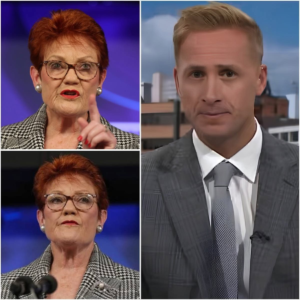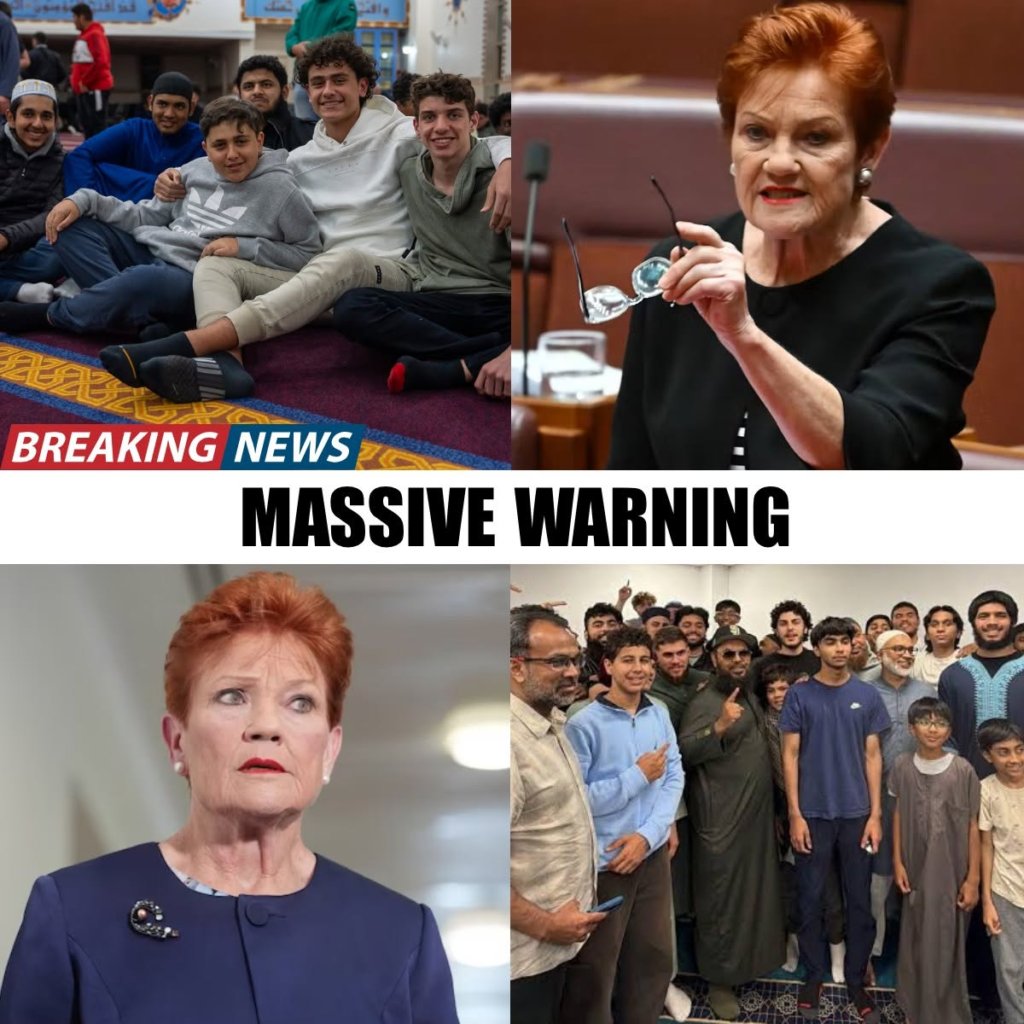
BREAKING! PAULINE HANSON LOSES IT AS ONE NATION IS OPPOSED BY LEBANESE MUSLIM ASSOCIATION
School Face-Covering Ban Ignites Clash Over Visibility, Equality and the Limits of Religious Accommodation
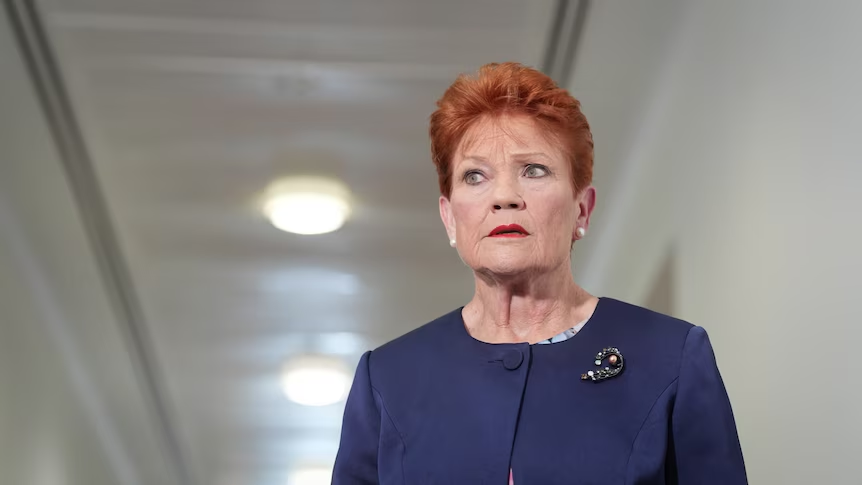
One Nation has drawn a sharp new line in the education debate, announcing a policy to ban full-face coverings — including burqas and niqabs — in every Australian school, including Islamic schools. Hijabs and other headscarves that leave the face visible would remain allowed. The party’s education spokeswoman, Colleen Harkin, and leader Pauline Hanson have framed the measure as a practical requirement for identification, classroom communication and a clear statement on the equality of women and girls.
The Lebanese Muslim Association has condemned the proposal, calling it an attempt to single out Muslims and manufacture a political issue from a practice that barely exists in Australian schools. Their central questions remain unanswered by the policy’s sponsors: How many students actually wear the niqab? How many teachers have reported an inability to teach or supervise because of face coverings? Where is the evidence of a problem large enough to justify a national ban?
The disagreement has quickly moved beyond dress codes into a broader contest over secular norms, gender equality and whether religious freedom in Australia is subject to clear civic limits.
The Case for the Ban
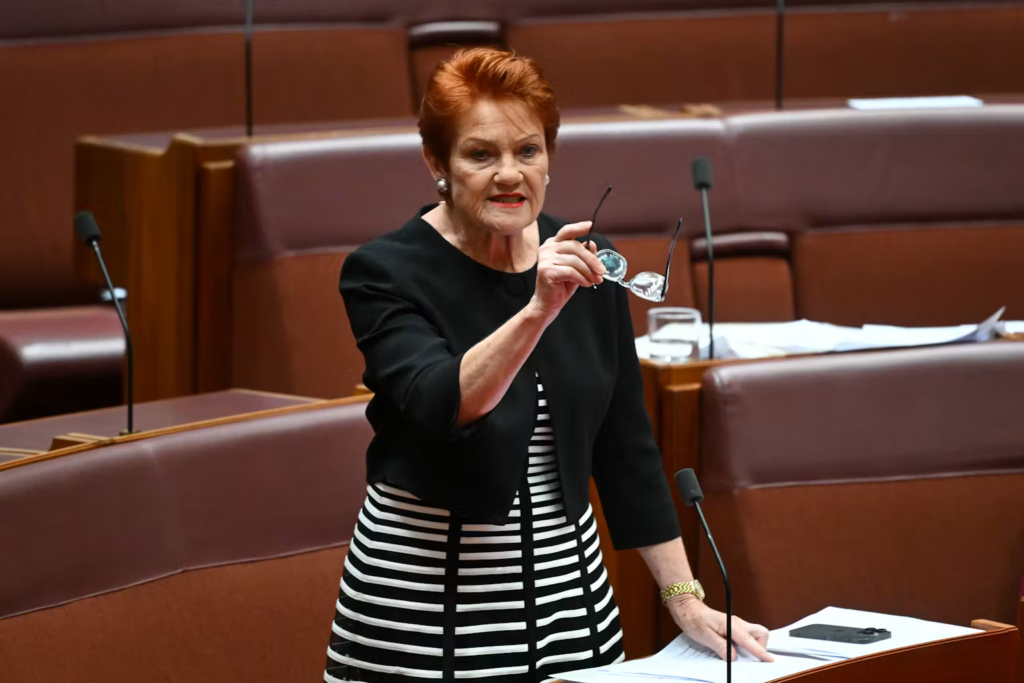
One Nation’s arguments rest on three pillars. First, identification and duty of care. Teachers and schools must be able to know who is on the premises and who they are addressing. Second, communication and learning. Facial expressions are fundamental to social and emotional development and to ordinary teaching. Third, gender equality. Removing face coverings in schools, the party argues, sends a positive signal that girls participate in education as visible equals.
The policy is deliberately limited. It does not target the hijab. It targets only those garments that fully obscure the face. Supporters present this as a measured boundary rather than a wholesale restriction on Islamic dress.
The Scale Question
Critics, including the Lebanese Muslim Association, argue the policy is a solution in search of a problem. Full-face coverings among school-age students appear extremely rare. Commentators familiar with high-Muslim-population areas of Sydney report almost never seeing a student in a niqab or burqa; the hijab is far more common. New South Wales already maintains an operational procedure allowing a female teacher to verify identity privately when needed. If the numbers are negligible and existing processes handle the rare cases, opponents ask why a national prohibition is required.
This scarcity cuts both ways politically. For opponents, it proves the ban is symbolic and targeted. For supporters, the small numbers make the rule low-cost to implement and high-value as a statement of principle. A clear standard, they contend, prevents future disputes and establishes expectations before any gradual increase in the practice occurs.
International Context
One Nation’s proposal does not exist in isolation. Roughly two dozen countries have enacted full or partial restrictions on face coverings in public spaces, government buildings, universities or schools. France maintains a broad public ban. Egypt, Syria and Morocco restrict face coverings in educational settings; Morocco has also limited manufacture and import on security grounds.
The European Court of Human Rights has upheld such measures, citing “le vivre ensemble” — the minimum requirements of living together in society — alongside public safety, state secularism, gender equality and human dignity. These decisions provide a body of legal reasoning that prioritises shared civic norms in certain institutional contexts over unrestricted religious expression.
Human rights organisations take the opposing view. Amnesty International and Human Rights Watch argue that bans infringe religious freedom and autonomy and may push women and girls out of education and public life. Both camps claim to defend women; they simply locate the primary harm in different places — one in the religious requirement or social pressure to cover, the other in the state’s restriction of choice.
Principle Versus Politics
The Lebanese Muslim Association characterises the policy as dog-whistling: a deliberate effort to signal hostility toward Muslims for electoral advantage. One Nation rejects the charge. Its supporters describe the measure as an assertion that religious freedom has limits, and that no community is exempt from ordinary requirements of visibility and equal participation in schools. They note that similar boundaries would apply to any group seeking to obscure identity in a classroom setting.
The debate therefore turns on two questions. Is there a practical problem of sufficient scale to justify legislation? And even if current numbers are tiny, is a clear rule still justified on grounds of consistency, safety, communication and the kind of civic culture Australia wants in its schools?
What Happens Next
The announcement is not yet law. Its prospects depend on parliamentary arithmetic, public reaction and One Nation’s ability to keep the issue alive. For the major parties, the proposal creates a familiar dilemma: dismiss it and appear indifferent to concerns about integration and equality, or engage and risk inflaming a culturally sensitive conflict.
For voters, the choice is relatively clear. One side sees a modest, practical rule already reflected in the laws of multiple democracies and some Muslim-majority countries. The other sees an unnecessary measure that stigmatises a minority and solves a problem few can locate in daily school life.
Pauline Hanson and One Nation have placed the face-covering question firmly on the national agenda. The Lebanese Muslim Association has met it with categorical rejection. The contest between those positions will test whether Australia can discuss the boundaries of religious expression in public institutions with evidence and principle, or whether the conversation will remain trapped in accusations of bigotry on one side and denial on the other. The outcome will say as much about the country’s civic confidence as it does about what students wear through the school gate.