Gina Rinehart and the renewed debate over ISIS-linked Australians
A renewed debate over the return of Australians linked to Islamic State has brought questions of national security, citizenship and the government’s power to prevent citizens from returning home back into the political spotlight.
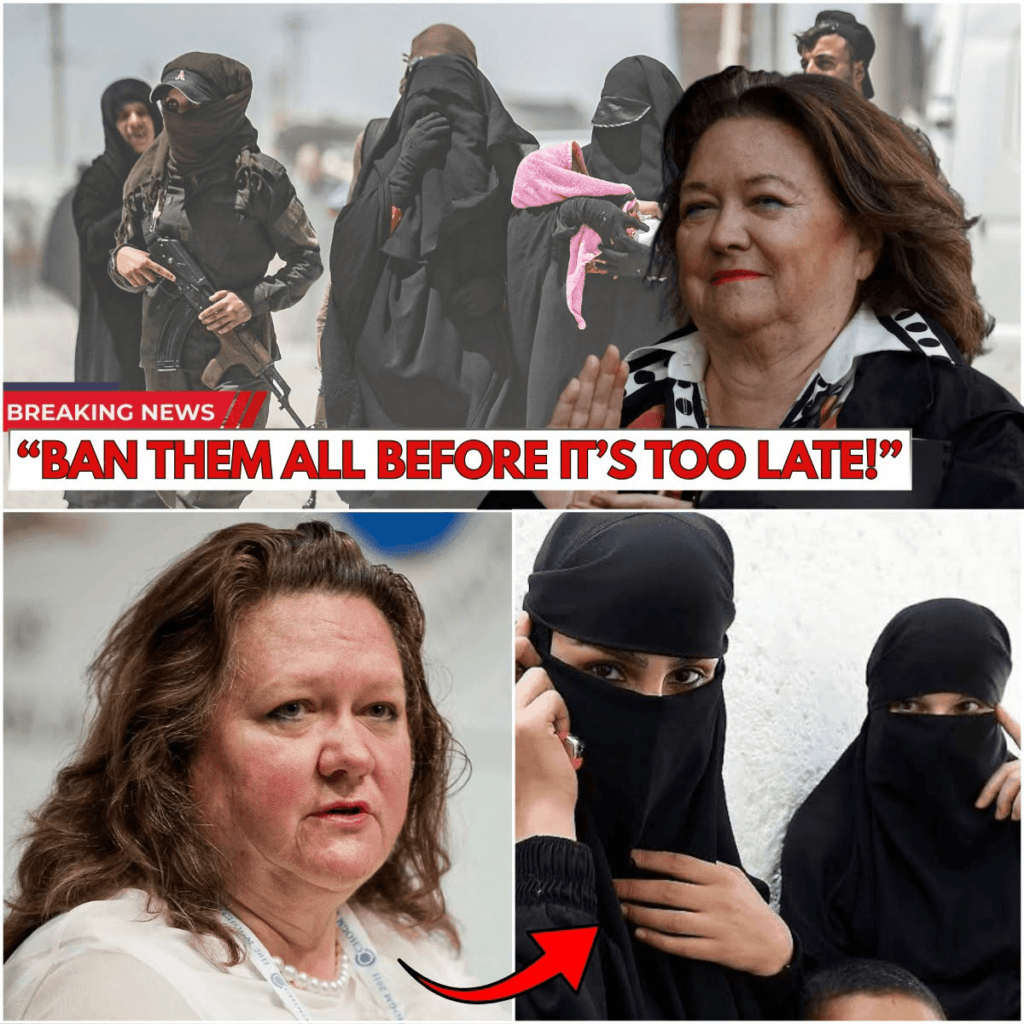
Social-media posts have attributed a strong position to mining billionaire Gina Rinehart, claiming that she called for women associated with Islamic State to be permanently prevented from returning to Australia and for their citizenship to be revoked.
However, the specific claim that Rinehart made such a call has not been independently verified in the available reporting. The broader policy debate is real, but it is important to distinguish documented government action and political arguments from claims circulating online.
The issue has centred on Australian women and children who spent years in detention camps in north-eastern Syria after the collapse of Islamic State’s territorial control in 2019.
In February 2026, a group of 34 Australian citizens — 11 women and 23 children — attempted to leave the Al-Roj camp and travel towards Australia. The federal government responded by issuing a Temporary Exclusion Order against one woman, preventing her from returning for up to two years on national-security grounds.
The government’s use of the order highlighted a difficult legal question: how far Australia can go in restricting the return of its own citizens.
Temporary Exclusion Orders, or TEOs, were introduced in 2019 under Australia’s counter-terrorism laws. They allow the government to prevent an Australian citizen from returning from overseas when the relevant legal threshold concerning terrorism risk is met.
The orders are designed to give authorities time to assess an individual’s circumstances and establish security arrangements before a possible return.
The legislation does not, however, provide a simple mechanism for permanently removing citizenship from every Australian citizen associated with a terrorist organisation.
Legal experts cited by the ABC have pointed out that Australian citizens have a right to return to Australia. They have also noted that repeatedly renewing exclusion arrangements could raise significant constitutional and legal questions.
That legal framework is central to the current debate.
Critics of allowing ISIS-linked Australians to return have focused on the potential security risks. They argue that people who travelled to Syria or Iraq to join, support or associate with Islamic State should face stringent security measures before being allowed back into Australia.
The federal government has also acknowledged security concerns.
Home Affairs Minister Tony Burke previously said one woman in the Syrian group had been issued with a Temporary Exclusion Order after security information was received. He said security agencies had not advised that other members of the group met the legal threshold required for similar orders at that time.
The government’s approach has consequently involved assessing individuals rather than automatically applying the same restrictions to every woman or child in the group.
That distinction has been challenged by political opponents.
The Coalition questioned why additional exclusion orders had not been imposed and raised concerns about whether some members of the group represented a security threat. In March, the opposition also faced criticism after describing the Australian children in the group as terrorist “sympathisers”, without separating the children from the conduct of their mothers.
The legal situation also changed during the year.
In June, the government confirmed that an Australian woman who had previously been subject to a Temporary Exclusion Order was permitted to return after applying for a permit. Burke said the government had received legal advice that it could no longer refuse her application.
The woman, Hodan Abby, was to be subject to extensive monitoring after her return. Authorities imposed strict reporting and communication requirements, while ASIO said it would use its powers to manage security concerns surrounding her return.
The development demonstrated the difference between temporarily excluding a citizen and permanently preventing that person from returning.
A TEO can delay a person’s return, but it does not necessarily remove their Australian citizenship.
This distinction is particularly important when considering proposals to revoke citizenship.
Australia’s citizenship laws contain powers concerning dual nationals who engage in certain terrorism-related conduct, but citizenship deprivation is subject to specific legal conditions. It is therefore not simply a matter of a political figure announcing that citizenship should be removed from an entire category of people.
The question becomes even more complicated when children are involved.
The 2026 group included 23 children. Some had been taken to Syria by their parents, while others were born in detention camps after the collapse of Islamic State’s territorial control.
The children were not themselves responsible for their parents’ decisions to travel to Syria.
That has led child-welfare specialists and international organisations to argue that their circumstances need to be considered separately from questions surrounding their parents.
The ABC reported that some experts had warned prolonged exposure to detention camps could itself create risks for children’s wellbeing and future exposure to extremist ideology.
The government has therefore faced competing responsibilities: managing potential national-security risks while also dealing with Australian citizens, including children, who have spent years in difficult conditions overseas.
Several of the women eventually returned to Australia.
When a group arrived in May, some of the women were arrested after reaching Australian territory. Two women were charged with slavery offences, while another was charged with joining a terrorist organisation and travelling to a declared terrorist area.
Those cases demonstrate that returning to Australia does not necessarily mean avoiding criminal or security scrutiny.
Individuals can still face investigation, surveillance, criminal charges or other legal measures where evidence and Australian law provide grounds for action.
The issue has therefore developed into a broader discussion about deterrence.
Supporters of tougher restrictions argue that Australians who travel overseas to associate with terrorist organisations should understand that returning home may not be straightforward.
Opponents of blanket restrictions argue that Australia cannot simply abandon its citizens overseas and that security risks should be assessed individually through existing laws.
The disagreement is partly about where responsibility should lie.
One position places greater emphasis on the individual’s decision to travel to an area controlled by Islamic State and the potential consequences for national security.
Another emphasises Australia’s legal obligations toward its citizens and the need to distinguish adults suspected of involvement in terrorism from children who were brought into the conflict by their parents.
The debate has also been affected by the political language surrounding the women.
The term “ISIS brides” has become widely used in Australian political and media discussions, although the women involved have different individual histories and circumstances. Some have said they were manipulated or pressured into travelling to Syria, while others are accused of having knowingly supported Islamic State.
Those claims need to be assessed individually rather than assumed to apply equally to everyone in the group.
For the same reason, claims about permanent bans or citizenship revocation need to be examined against the actual legal framework.
The current evidence confirms that Australia has used Temporary Exclusion Orders to restrict the return of some citizens linked to Islamic State. It also confirms that at least one woman previously subject to such an order was eventually permitted to return after legal advice was obtained.
What has not been established is the social-media claim that Gina Rinehart personally launched or led a campaign to permanently ban all women linked to Islamic State and revoke their Australian citizenship.
That distinction matters because the issue involves serious questions of national security and citizenship, where unsupported claims can easily be mistaken for official policy.
The debate is nevertheless likely to continue.
Australia must balance the security assessment of people who have spent time with or around Islamic State against its legal obligations to citizens. It must also determine how to treat children who were taken to conflict zones by their parents and who may have spent much of their lives in detention.
The experience of the Australian citizens returning from Syria demonstrates that the government already has significant powers available to manage these cases, including exclusion orders, surveillance, reporting requirements and criminal law.
Whether those measures should be strengthened remains a political question.
For now, the documented debate is less about an established blanket policy to permanently exclude all ISIS-linked women and more about how Australia should deal with individual citizens who travelled to territory controlled by a terrorist organisation, what security measures should apply when they return, and how the government should balance national security with citizenship rights.
Those questions remain central to the continuing discussion over Australia’s response to the legacy of Islamic State in Syria.