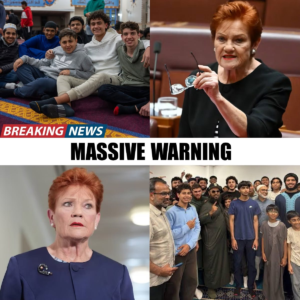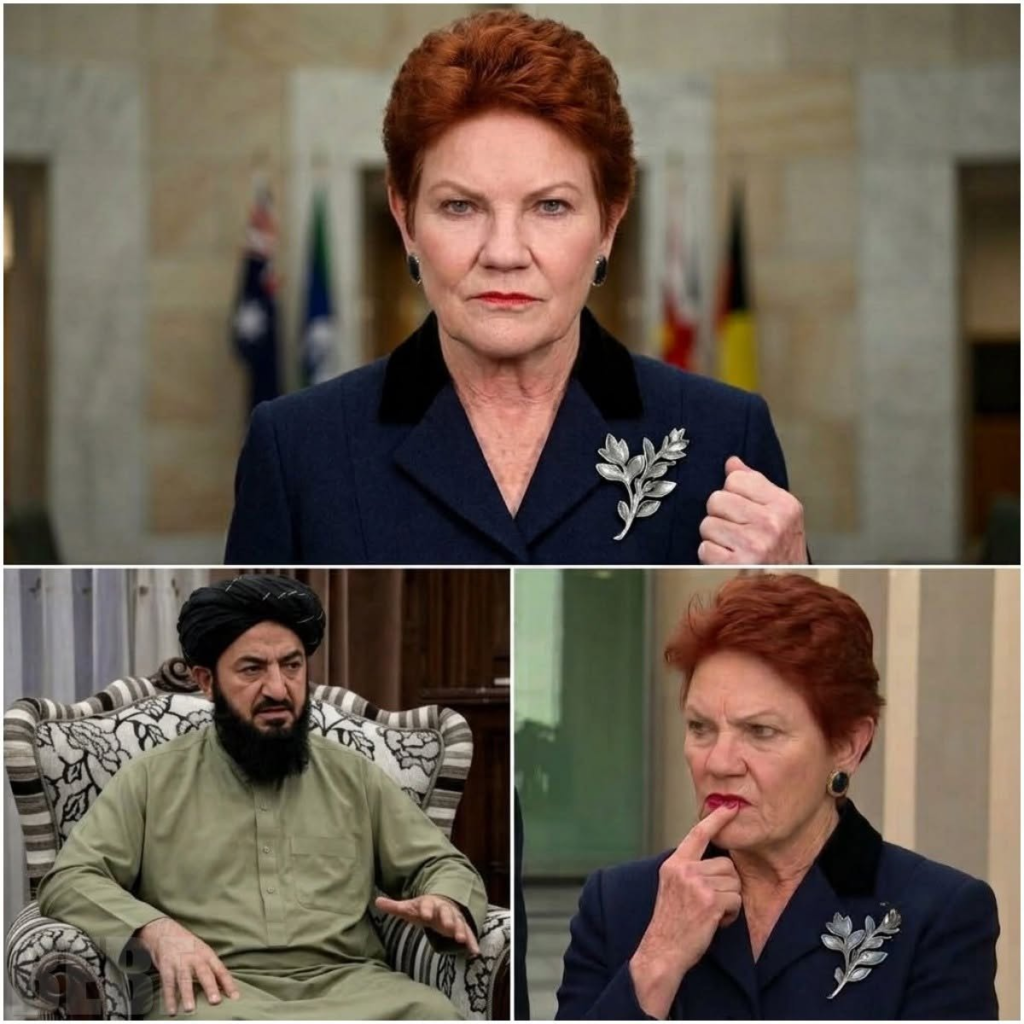
CANBERRA — Australia’s long-running argument over immigration, Islam, national security and the role of religious law has erupted again, with Pauline Hanson placing the issue firmly back at the centre of One Nation’s political agenda.

The One Nation leader has spent much of 2026 demanding tougher restrictions on migration from countries she associates with radical Islam, stronger action against extremist networks and a more restrictive approach to religious symbols and practices.
Her position has repeatedly triggered fierce political opposition — but it has also ensured that questions surrounding Sharia law, radicalisation and the limits of religious freedom remain highly visible in the national debate.

THE DEBATE IS MUCH BIGGER THAN SHARIA LAW
Hanson’s argument is fundamentally built around the principle that Australia should operate under one national legal system.
In speeches and public statements this year, she has repeatedly linked that position to her broader concerns about integration, immigration and radicalisation.
At the National Press Club in June, Hanson said Australia should remain a “multiracial society” but argued that Australians should live under what she called a “monocultural” umbrella. She also called for restrictions on immigration from places she described as immersed in radical Islam and advocated action against hate preachers.
The issue subsequently became even more prominent during her July appearance in the United Kingdom, where Hanson reiterated her opposition to the burqa and called for restrictions on migration from what she described as “radical Islamic countries.” She rejected suggestions that her position amounted to support for a return to the White Australia policy.
That distinction is central to the political argument.
Hanson describes her proposals primarily through the language of national security, integration and Australian cultural values.
Critics, however, argue that policies targeting particular religious or national groups risk discrimination and can unfairly associate ordinary Muslims with violent extremism.
The result is a debate that extends well beyond the question of Sharia itself.
A NEW SECURITY BILL PUTS THE ISSUE INTO PARLIAMENT

The rhetoric has also been accompanied by concrete legislative action.
On August 12, Hanson introduced the Protecting Australians from Foreign Terrorist Fighters Bill 2026 in the Senate. The bill was subsequently referred to the Senate Legal and Constitutional Affairs Legislation Committee, which reported on September 7. Parliament currently lists the legislation as before the Senate.
The proposal focuses on Australians who have voluntarily participated in, supported or materially assisted listed terrorist organisations while overseas.
Under the bill, a minister could seek a foreign terrorist fighter exclusion order through the Federal Court. The court would need to be satisfied that the person had engaged with a listed terrorist organisation, posed an unacceptable risk to Australia’s safety and could not be dealt with effectively through a less restrictive measure.
Hanson presented the legislation as a national-security measure designed to prevent people associated with terrorist organisations from returning to Australia when authorities consider them to pose a serious risk.
In her Senate speech, she argued that protecting Australians should be the government’s first responsibility.
The proposal therefore represents a different part of the debate from Sharia law itself.
One concerns the relationship between religious principles and Australia’s secular legal system.
The other concerns what powers the state should possess when dealing with Australians who have participated in foreign terrorist organisations.
But Hanson has increasingly placed both subjects within the same broader political argument.
THE “GOOD MUSLIMS” CONTROVERSY
That argument became considerably more contentious earlier this year.
In February, Hanson made comments questioning whether there were “good Muslims” during a television interview concerning Australians linked to Islamic State.
The remarks provoked widespread criticism.
In March, the Senate passed a censure motion condemning what it described as inflammatory and divisive comments seeking to vilify Muslim Australians. The motion passed 36–17.
Hanson subsequently clarified that she did not believe there were no good Muslims.
The controversy did not end there.
Police later investigated the comments under Australia’s new hate-speech legislation. In July, the Australian Federal Police determined that the remarks did not meet the legal threshold for prosecution.
That outcome created an important distinction between political condemnation and criminal liability.
Hanson’s remarks were censured by the Senate, but the AFP ultimately determined that they did not constitute an offence under the relevant hate-speech provisions.
FROM RELIGIOUS LAW TO RADICAL EXTREMISM
The distinction is particularly important because Australian law does not simply criminalise a person’s religion or religious beliefs.
The more difficult legal questions concern conduct: whether a person has advocated violence, supported terrorism, incited hatred, recruited others to terrorist organisations or committed another specific offence.
That issue has become particularly prominent following controversy surrounding a Melbourne preacher whose online sermon contained statements interpreted as calling for violence against Jews and Christians.
Hanson has argued that authorities need stronger powers to deal with religious centres and individuals promoting extremist violence.
Reports on her latest position say she has called for greater authority to shut down organisations or centres involved in extremist activity, while arguing that enforcement should focus on radical networks rather than Muslims generally.
That distinction will likely remain one of the most fiercely contested elements of the debate.
Where does legitimate religious expression end and unlawful incitement begin?
And how should authorities intervene without treating an entire religious community as a security threat?
Those are legal and political questions rather than questions that can be resolved simply by invoking Sharia law.
HANSON WANTS A MUCH TOUGHER IMMIGRATION SYSTEM
Immigration remains the connecting thread running through Hanson’s position.
In July, she explicitly said she did not want people coming to Australia from “radical Islamic countries.” She also argued for stronger screening and tougher restrictions on migration.
During another July interview, Hanson reiterated her support for banning the burqa and restricting migration from countries she associates with radical Islam.
One Nation has separately promoted a ban on the burqa, describing it as incompatible with Australian values and arguing that it represents a failure of Australia’s immigration policy.
Hanson’s supporters frame these policies as measures designed to strengthen integration and national security.
Critics argue that religious clothing, nationality and political extremism should not be treated as interchangeable categories.
That disagreement is precisely why the debate continues to generate such intense political reactions.
THE QUESTION AUSTRALIA CANNOT AVOID
The Sharia debate is therefore becoming part of something much larger.
Australia is simultaneously confronting questions about:
- immigration levels and screening;
- religious freedom;
- violent extremism;
- hate-speech laws;
- the return of Australians associated with terrorist organisations;
- the powers of ASIO and the AFP;
- integration and social cohesion;
- and the boundaries of political expression.
Hanson has made clear where One Nation stands.
Her approach emphasises tighter immigration controls, stronger counter-extremism powers and a single Australian legal framework rather than recognition of religious law as an alternative legal authority.
The government and civil-rights advocates approach the issue differently, emphasising existing criminal and national-security laws while warning against conflating violent extremism with an entire religion or migrant community.
And that leaves Australia facing a difficult question that is considerably broader than the headline “Sharia law.”
How far should a democratic country go to protect itself from genuine extremist threats — without allowing security policy to become a substitute for judging people by their religion or background?
For Hanson and One Nation, the answer is increasingly clear: tougher immigration rules, tougher counter-extremism measures and a much harder line on what they regard as incompatible with Australian values.
For Australia’s broader political system, the argument is only beginning.