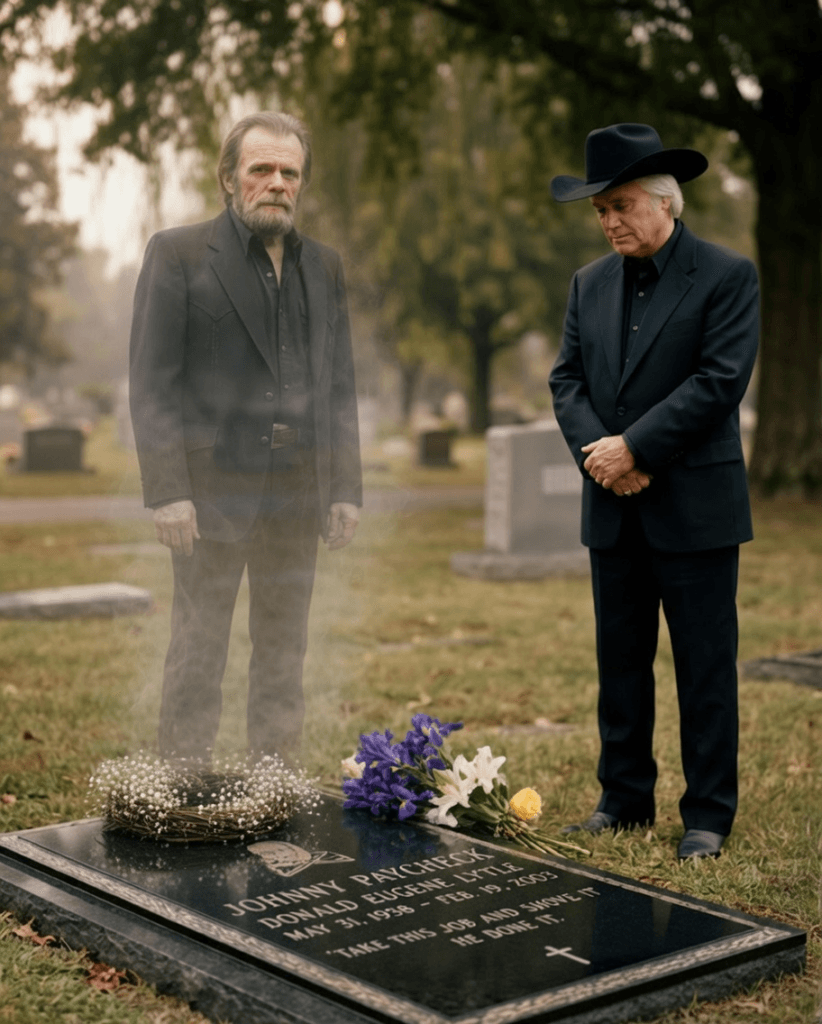
Johnny Paycheck Lived Hard, Sang Harder, and Left Behind a Working-Class Anthem America Never Forgot
Before Nashville knew the name Johnny Paycheck, Ohio knew Donald Eugene Lytle. He was a kid from Greenfield with a guitar in his hands almost as soon as he was old enough to hold one. By the time Donald Eugene Lytle was six, music had already become part of daily life. By nine, Donald Eugene Lytle was winning talent contests. That kind of beginning sounds almost gentle now, like the first page of a familiar country story. But Johnny Paycheck’s life was never going to stay gentle for long.
As a teenager, Donald Eugene Lytle drifted fast and far. At fifteen, Johnny Paycheck was riding the rails, living rough, learning things that could not be taught in any classroom. There was restlessness in him, and maybe hunger too. The kind that pushes a young man out into the world before he is ready. The Navy offered discipline and direction, but even that chapter turned dark. After assaulting a superior officer, Johnny Paycheck was court-martialed and spent years in military prison. Long before the records, the hits, the applause, and the legend, there was already trouble, punishment, and survival.
The Road to Nashville Was Not a Straight One
When Johnny Paycheck came out of that chapter, Nashville did not welcome a finished star. It met a man still piecing himself together. Donald Eugene Lytle worked under other names, including Donny Young, and earned his way through the city the hard way. Johnny Paycheck played bass, sang harmony, and spent time in the orbit of major country names, especially George Jones. That mattered. George Jones did not keep just anyone close. Talent had to be real. Instinct had to be sharp.
There was songwriting talent too. Johnny Paycheck helped write Apartment No. 9, the song that gave Tammy Wynette her first chart hit and quietly proved he was more than a wild man with a microphone. Then came the reinvention. Donald Eugene Lytle became Johnny Paycheck, a name with punch, memory, and attitude. It fit. So did the records that followed.
The Song That Hit Like a Hammer
In 1977, Johnny Paycheck recorded Take This Job and Shove It, written by David Allan Coe. What happened next felt bigger than a hit. The song exploded because people did not just hear it. People recognized themselves in it. It was anger, exhaustion, pride, and release packed into a few unforgettable minutes. Blue-collar workers heard a truth they rarely heard sung back to them so directly.
Take This Job and Shove It became Johnny Paycheck’s signature, and with good reason. It was not polished into something comfortable. It sounded like frustration that had finally found a melody. The song reached number one, sold in huge numbers, and even inspired a Hollywood film. Few artists ever get one song that completely captures a piece of American life. Johnny Paycheck got that song, and he delivered it in a voice that sounded like it had already been through the fight.
Johnny Paycheck did not sing like a man imagining hardship. Johnny Paycheck sang like a man reporting from inside it.
The Fall, the Return, and the Quiet Kindness at the End
But success did not erase the chaos. Johnny Paycheck’s life kept swinging between triumph and collapse. There were more legal problems, more financial trouble, and more evidence that fame had never really tamed the man behind the songs. For a while, it seemed like the story might end the way too many stories do, with talent buried under damage.
Yet late in life, there was a kind of return. Johnny Paycheck joined the Grand Ole Opry in 1997, and that moment carried weight. It suggested not perfection, but restoration. Not a clean fairy-tale ending, but a hard-earned place back inside country music’s most respected circle. By then, Johnny Paycheck was seen by many not just as an outlaw voice, but as a survivor.
When Johnny Paycheck died in 2003 at age sixty-four, the headlines told one story. Friends knew another. George Jones quietly stepped in and paid for Johnny Paycheck’s burial plot next to his own. It was not a grand public speech. It was not a publicity move. It was a gesture that said something deeper than any award could say. Beneath the chaos, the arrests, the debts, the hard living, Nashville still knew exactly who Johnny Paycheck had been.
Johnny Paycheck was flawed, stubborn, gifted, and impossible to smooth out into something easy. That may be why the music still holds up. The life was messy. The voice was real. And when America needed a song for every tired worker staring at the clock and dreaming of walking out for good, Johnny Paycheck gave it one that still refuses to fade.