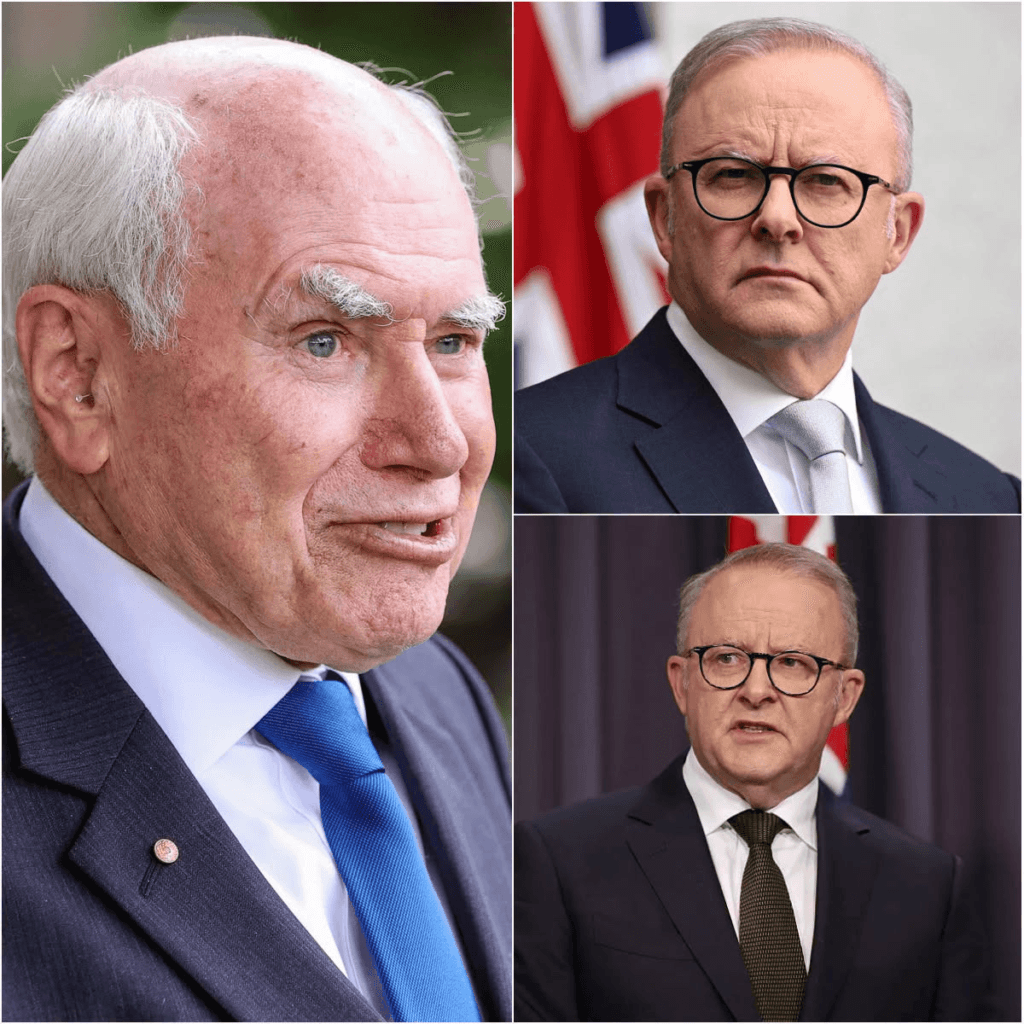
Former Prime Minister John Howard has intensified pressure on the Australian government, arguing that Prime Minister Anthony Albanese should appear before the Royal Commission into Anti-Semitism and Social Cohesion, commonly referred to as the Bondi Royal Commission.
In an interview, Howard stopped short of criticizing Royal Commissioner Virginia Bell and instead directed his concerns toward the government that established the inquiry.
Howard argued that Albanese, as the prime minister who initiated the commission, should be prepared to answer questions about the decisions and circumstances that led to its creation.
His intervention adds a new political dimension to an inquiry already facing scrutiny over its scope, witnesses and timetable.
The former prime minister said he believed the government should consider expanding the commission’s terms of reference rather than placing responsibility for such changes on Bell herself.
Howard’s argument rests partly on his own experience of appearing before an inquiry during the controversy surrounding the Australian Wheat Board.
During that episode, Howard recalled, he entered the witness box and faced questioning under oath alongside senior ministers including Alexander Downer and Mark Vaile.
For Howard, that experience provides a precedent for the principle that senior political leaders should not automatically be exempt from scrutiny when their governments are the subject of a major inquiry.
He has therefore questioned why Albanese and Home Affairs Minister Tony Burke have not been called to give evidence.
The issue has become particularly contentious because the commission is examining questions surrounding antisemitism, social cohesion and the broader response to extremism.
Critics of the inquiry argue that understanding the government’s decisions requires examining what warnings ministers received and how those warnings were handled.
Supporters of the government, however, can argue that the commission must determine for itself which witnesses are necessary and relevant to its investigation.
The dispute has consequently raised a broader question about the appropriate relationship between a royal commission and the political leaders whose decisions may fall within its examination.
Howard has also questioned the absence of some figures associated with public controversies surrounding extremist rhetoric and alleged celebrations of violence.
Among those mentioned by critics is Sheikh Ibrahim Dadoun, whose public statements have been cited as an example of the kind of evidence they believe the commission should examine.
Any assessment of such allegations, however, ultimately depends on evidence presented to the commission rather than political commentary surrounding its proceedings.
Another source of controversy is the commission’s decision to extend its reporting deadline by four days.
The original reporting date of December 14 has been moved to December 18, with the commission saying the change was intended to avoid overshadowing the first anniversary of the Bondi attack.
The timing has nevertheless prompted speculation among critics because December 18 falls immediately before the Christmas period.
There is no established evidence that the revised date was chosen to minimize political scrutiny, but the timing has nevertheless become part of the public debate over the inquiry.
Former Treasurer Josh Frydenberg and sporting icon Dawn Fraser have also been identified by critics as figures who have questioned aspects of the commission’s work and called for broader scrutiny.
Their concerns add to a growing debate over whether the inquiry has sufficiently examined the warnings and political decisions that preceded the events under investigation.
Howard’s intervention is significant partly because of his own political history and his experience leading Australia through the aftermath of the September 11 attacks and the Bali bombings.
His argument is that accountability should apply to political leaders even when appearing before an inquiry may be uncomfortable or politically damaging.
The comparison with the Australian Wheat Board affair gives his criticism a personal dimension that goes beyond a conventional opposition attack on the government.
it is examining.
As the December reporting deadline approaches, pressure is likely to remain focused on the witnesses called, the questions asked and the evidence ultimately presented to the public.
For the Albanese government, the challenge is to demonstrate that the inquiry has been allowed to operate independently while also ensuring that those responsible for major policy decisions are prepared to explain their actions.
For the commission, the greater challenge will be producing findings that command confidence across a deeply divided political landscape and withstand scrutiny from both supporters and critics.
Howard’s intervention has therefore placed accountability at the center of the debate, leaving one question increasingly difficult to avoid: should the prime minister who established the inquiry also be prepared to stand before it and answer questions under oath?