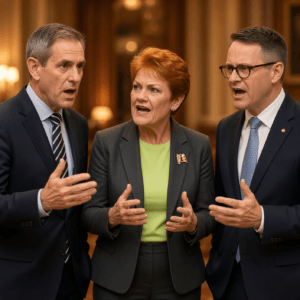
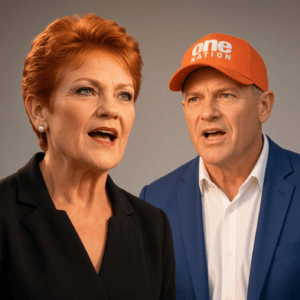
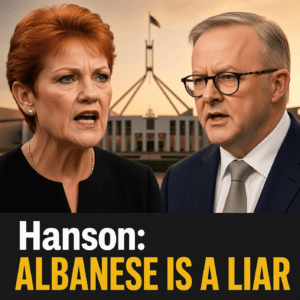
One Nation has renewed its push to strip taxpayer funding from the ABC after the national broadcaster apologised to Gina Rinehart over a graphic satirical segment depicting violence against Australia’s richest person.
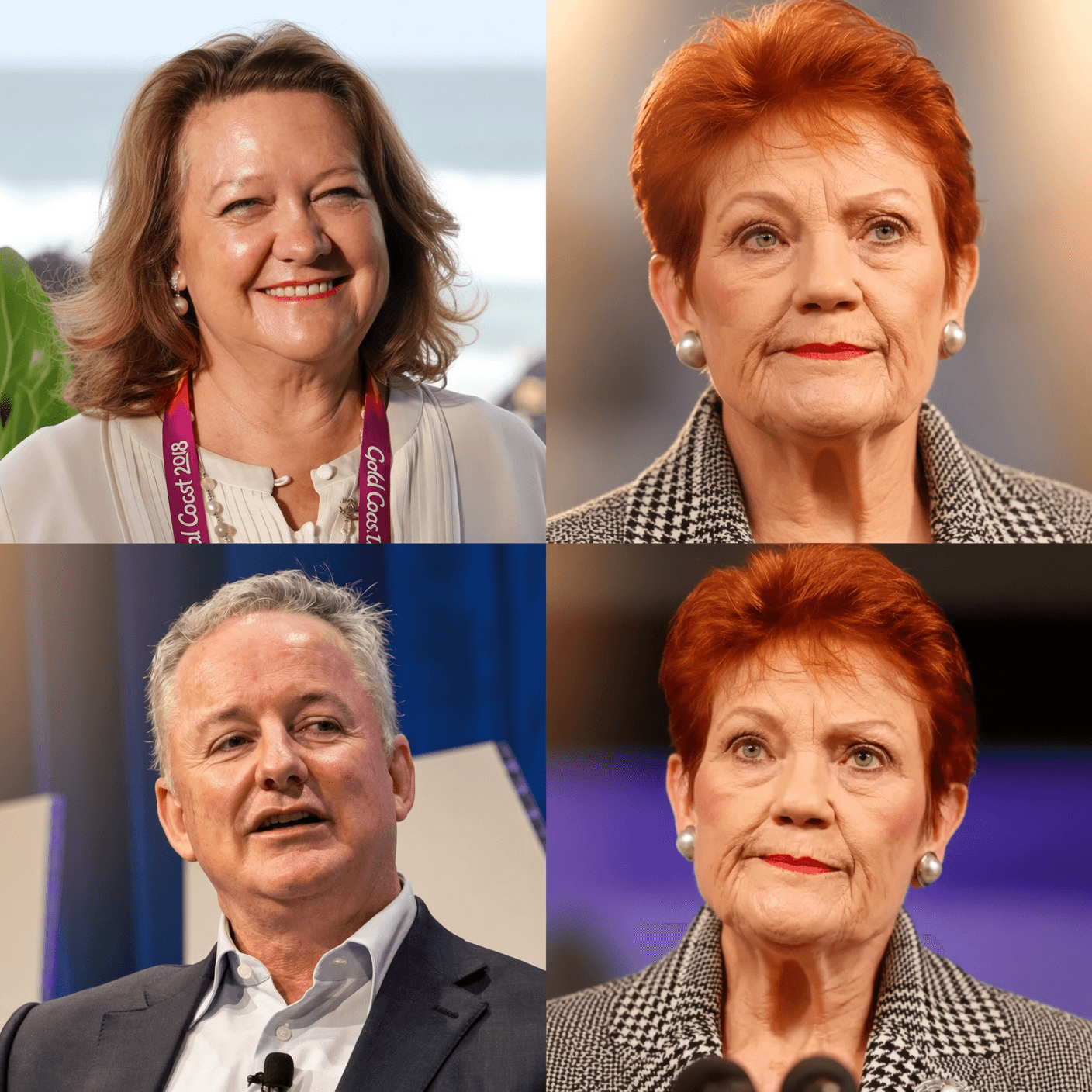
The controversy has become the latest flashpoint in a much larger political fight over whether Australians should continue providing about $1.3 billion a year to a public broadcaster routinely accused by its conservative critics of ideological bias.
For One Nation, the Rinehart episode has provided a particularly potent example because the ABC ultimately apologised and removed the offending material despite its own Ombudsman finding that the segment had not breached the broadcaster’s editorial standards.
That unusual outcome has left critics asking how content serious enough for the managing director to personally apologise for could nevertheless satisfy the ABC’s formal editorial rules.
The ABC says the distinction is legitimate: something can comply with its published standards yet still fall below what audiences reasonably expect from the national broadcaster.
One Nation sees precisely the opposite lesson.
The party argues the episode shows that the ABC’s internal standards and accountability mechanisms are inadequate and that taxpayers should no longer be forced to finance an organisation they may believe does not represent them fairly.
What the ABC broadcast
The dispute began with the July 12 episode of Race Around the World, a television competition in which emerging filmmakers produced short films while travelling around Australia.
Contestant Kate McGuinness created a roughly four-minute piece titled A Very Relaxing Video.
The film employed an absurdist and deliberately provocative style, combining images of the Australian landscape with a fictional scenario involving revolution, wealth and Rinehart.
Its closing passage described an explicitly violent and degrading act being inflicted on the mining billionaire.
The language was sufficiently graphic that it rapidly became the centre of complaints once the segment attracted wider attention.
Hancock Prospecting wrote to the ABC Board on July 23 demanding action, arguing that the material promoted and normalised violence against a woman.
The company sought its removal, an apology and an investigation into how it had been approved for broadcast.
McGuinness subsequently apologised to people who had been offended while explaining that the film was intended as exaggerated, cartoonish satire rather than a literal encouragement of violence.
The ABC initially allowed the program to remain available while complaints were considered.
That decision became almost as controversial as the original broadcast.
ABC Ombudsman found no breach
The ABC’s independent Ombudsman examined the complaints and reached a conclusion that has become central to the political argument.
The segment did not breach the ABC’s editorial standards on harm and offence.
The Ombudsman considered the nature and context of the program, including its exaggerated comedic style, and did not find that the film amounted to literal advocacy of violence against Rinehart.
For defenders of the program, that finding demonstrated why satire cannot always be assessed by extracting its most offensive line from the context in which it appeared.
For critics, it raised a different question.
If graphic sexualised violence directed at an identifiable woman could pass the ABC’s existing standards, were those standards themselves adequate?
ABC managing director Hugh Marks ultimately took a position that went beyond the Ombudsman’s technical finding.
On August 6, the broadcaster formally apologised.
“While the Ombudsman has found that the film did not breach the ABC’s editorial policies, the ABC acknowledges the episode has fallen short of community expectations,” Marks said.
The disputed material was removed from ABC platforms.
The broadcaster also indicated it would review its editorial guidance, particularly around depictions of violence.
Rinehart says she was left ‘dehumanised’
The apology did not end the dispute.
Hancock Prospecting characterised it as belated, pointing to the period for which the segment had remained available after concerns were raised.
Rinehart has said the program left her feeling “dehumanised” and “worthless”, while her company argued that the issue should not be dismissed merely because she is wealthy or politically influential.
The company framed the controversy as a question about violence against women rather than permissible criticism of a billionaire.
That argument attracted support from figures well beyond One Nation.
Deputy Prime Minister Richard Marles and Greens senator Sarah Hanson-Young were among political figures who criticised the nature of the material.
Former Olympic champion Dawn Fraser also condemned the episode.
The breadth of that criticism complicates any attempt to characterise the controversy as solely a conservative campaign against the ABC.
There is nevertheless a major difference between condemning one editorial decision and calling for the national broadcaster’s public funding to be abolished.
One Nation has chosen the latter.
One Nation says taxpayers should not have to fund it
One Nation senator Sean Bell has been among the politicians using the Rinehart controversy to renew pressure on the ABC’s funding model.
The party’s broader position is well established.
Pauline Hanson has repeatedly accused the ABC of institutional political bias and has proposed substantial cuts to its taxpayer support, while also advocating the abolition of SBS.
The Rinehart apology has now given the party a fresh case study with which to make that argument.
One Nation’s contention is that a publicly funded broadcaster carries obligations beyond those imposed on a privately owned newspaper, television network or digital outlet.
Australians can stop subscribing to a commercial publication or choose not to purchase a product advertised on a commercial network.
They cannot individually opt out of financing the ABC through general Commonwealth revenue.
For Hanson and her colleagues, that makes impartiality and accountability particularly important.
Their argument is straightforward: Australians should not be compelled through taxation to finance media they believe is hostile to their values or political views.
Supporters of public broadcasting reject the premise that disagreement with ABC journalism establishes institutional bias.
They also argue that the broadcaster’s purpose cannot sensibly be judged by whether every taxpayer approves of every program.
The ABC now receives about $1.3 billion
The numbers themselves are important because the debate is frequently framed around “$1.2 billion” in annual taxpayer funding.
That figure broadly reflects recent funding levels, but the ABC’s allocation has increased.
The 2026–27 federal budget provides the broadcaster with approximately $1.3 billion in public funding when its major government-funded activities and transmission services are taken into account.
Budget documents show more than $1 billion in government revenue for general operational activities alone, with separate funding supporting transmission and distribution.
Previous Parliamentary Library analysis put ABC appropriations at $1.229 billion in 2025–26 and projected $1.266 billion in 2026–27 before subsequent budget measures.
The latest budget has pushed the overall figure higher again.
Supporters of the broadcaster note that nominal dollar increases do not tell the entire story.
Parliamentary Library analysis has found that, after adjusting for inflation, annual ABC appropriations remain below earlier historical levels.
That produces two sharply different political narratives from essentially the same numbers.
Critics see more than a billion dollars of compulsory public expenditure on a media organisation they regard as politically skewed.
ABC supporters see a national institution whose real funding has been squeezed over time while it is expected to provide television, radio, digital journalism and emergency coverage across an enormous country.
What Australians get for the money
Abolishing or radically cutting ABC funding would involve considerably more than changing the economics of political journalism.
The broadcaster operates national and local radio networks, television channels, ABC News, iview, ABC Listen and extensive regional services.
It also plays a distinctive role during bushfires, floods, cyclones and other emergencies, when local ABC radio can become a critical source of official warnings and practical information.
Regional broadcasting is particularly relevant to the funding argument.
Commercial media companies have steadily reduced operations in some smaller markets where audiences are insufficient to support extensive local journalism.
A publicly funded broadcaster is not required to abandon a community simply because serving it is commercially unattractive.
ABC supporters argue that this is precisely why a public broadcaster exists.
They also point to Australian drama, children’s programming, educational content, investigations and cultural coverage that may struggle to attract equivalent commercial investment.
For those reasons, “defund the ABC” is not merely a proposal to punish its political journalists.
Depending on how it was implemented, it could fundamentally change broadcasting outside Australia’s major metropolitan markets.
Former chairman raises subscription model
The argument is not limited to outright abolition.
Former ABC chairman Maurice Newman has used the Rinehart controversy to renew his criticism of the broadcaster’s culture and has argued for a radically different funding model.
Newman has suggested the ABC should move towards a subscription service rather than relying on compulsory taxpayer support.
Such a system would attempt to answer One Nation’s central objection: people who valued ABC content could pay for it, while those who did not would no longer be required to finance it.
But converting the ABC into a subscription product would immediately create difficult questions.
Would emergency broadcasting remain freely available?
Would regional services survive if their audiences could not commercially support them?
Would ABC News sit behind a paywall?
What would happen to free children’s and educational programming?
And would a subscription broadcaster still be expected to fulfil the public-service obligations contained in the ABC Charter?
Those questions demonstrate why changing the funding mechanism is more complicated than simply replacing an annual government appropriation with customer payments.
The Hanson-Rinehart relationship is part of the context
There is another element to One Nation’s intervention that cannot reasonably be ignored.
Hanson and Rinehart have a well-established personal and political relationship.
Hanson publicly describes the mining billionaire as a friend and confirmed in June that she takes policy advice from her.
She told ABC Radio Perth that Rinehart had been “very beneficial” and credited her with an idea for changing pension rules to allow older Australians to work more without losing benefits.
Companies and individuals associated with Rinehart have also provided substantial support to One Nation.
Earlier this year, Hanson revealed that a Rinehart-linked company had donated an aircraft to the party.
Rinehart has paid for or supported other travel involving Hanson, including international travel, and the two have appeared publicly together at political and business events.
In July, Hanson updated her parliamentary register to disclose that Rinehart had paid for flights from London to Sicily during a European trip.
None of that determines whether the ABC segment was acceptable.
A billionaire with political relationships is entitled to the same protections against genuine incitement or improper treatment as anybody else, and the ABC itself concluded that an apology was warranted despite its Ombudsman’s findings.
But the relationship is relevant when One Nation cites Rinehart’s treatment as justification for a fundamental restructuring of Australia’s public broadcasting system.
Readers are entitled to know that the politician demanding the change and the person at the centre of the complaint are not strangers.
The ABC’s unusual accountability problem
The most difficult question raised by the episode may ultimately be internal rather than political.
The ABC has effectively produced two conclusions about the same material.
Its Ombudsman found no breach of editorial standards.
Its managing director nevertheless concluded that the broadcast fell short of community expectations, apologised and removed the material.
Both positions can technically coexist.
Editorial standards establish formal tests, while management can decide that content meeting those tests was still a mistake.
Yet that distinction creates an obvious challenge for the broadcaster.
If its published standards permit material that senior management later decides should never have been aired, critics can reasonably ask whether the rules require revision.
Marks’ decision to review guidance around violence suggests ABC management recognises that problem.
On the other hand, a complaints system in which every controversial work automatically breaches editorial policy would make satire, comedy and challenging journalism extraordinarily difficult.
The broadcaster must therefore draw a line between offensive content and content so harmful or gratuitous that it fails its public responsibilities.
The Rinehart film exposed disagreement over where that line currently sits.
A much bigger fight than one television segment
One Nation’s renewed defunding campaign ensures the argument will not end with the removal of a four-minute film.
There are now at least three separate questions in play.
The first is whether the ABC should have broadcast the Rinehart segment. Management’s apology indicates that, whatever the Ombudsman’s technical finding, the organisation now accepts it fell below the standard audiences should expect.
The second is whether the episode demonstrates a systemic political bias. That is a much larger claim and cannot be established by one editorial failure alone.
The third is whether Australians should continue funding a national public broadcaster at all.
That question requires weighing the ABC’s failures against everything else the institution provides — including regional journalism, emergency broadcasting, Australian programming and services that may never be commercially profitable.
One Nation believes the Rinehart controversy strengthens the case for taking taxpayers out of the equation.
ABC supporters will argue that the apology demonstrates the opposite: a public institution made a contentious editorial decision, investigated complaints, removed the material and publicly acknowledged that it had fallen short.
Neither argument resolves the underlying dispute over trust.
Australians who believe the ABC is ideologically hostile are unlikely to be reassured simply because it eventually apologised.
Those who regard public broadcasting as essential are unlikely to accept that one offensive satire justifies dismantling a century-old national institution.
That is why the Rinehart controversy has become much bigger than the program that triggered it.
The ABC has already answered the narrow question by apologising.
One Nation now wants Parliament and voters to answer a much larger one: whether a national broadcaster that depends on taxpayers can retain public funding when a substantial section of those taxpayers no longer trusts the institution spending it.