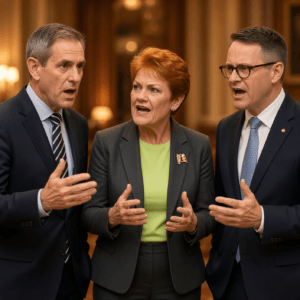
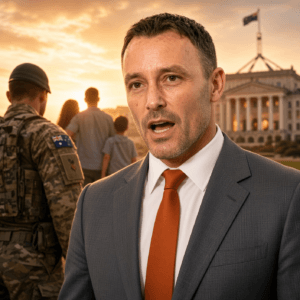
One Nation’s attempt to stop Australians linked to overseas terrorist organisations from returning home has moved from a minor-party national security proposal to a serious parliamentary test, with the Coalition now backing Pauline Hanson’s bill despite warnings from Labor that its central mechanism could fail in the High Court.
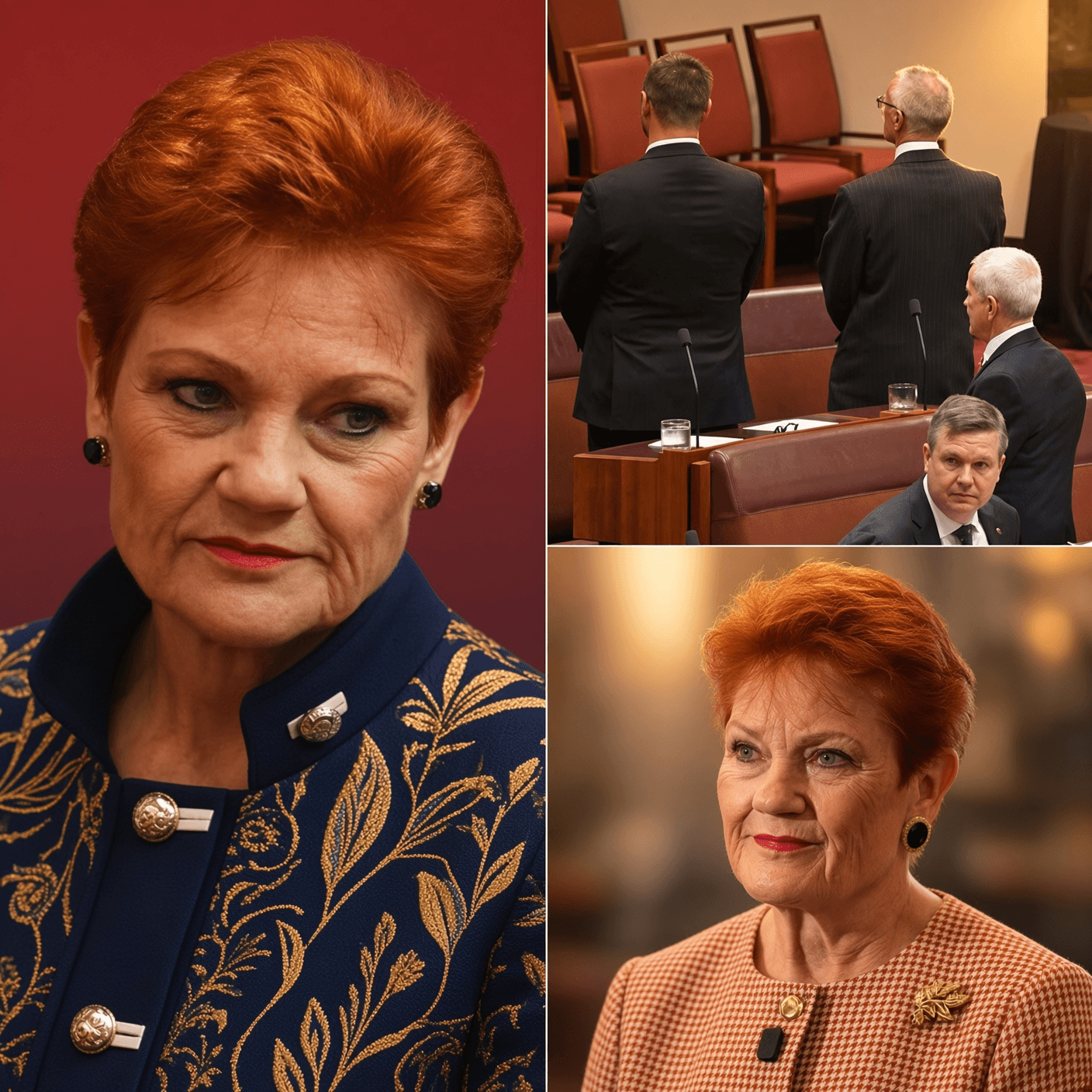
The Protecting Australians from Foreign Terrorist Fighters Bill 2026 proposes a new court-based exclusion regime aimed at Australian citizens who voluntarily served, participated in or materially supported listed terrorist organisations overseas.
Rather than simply expanding the government’s existing temporary exclusion powers, One Nation wants the Home Affairs Minister to be able to ask the Federal Court for an order preventing a person from returning to Australia where the court is satisfied that person presents an unacceptable risk to the community and cannot safely be managed through a less restrictive measure.
The 22-page proposal would also change passport laws, terrorism-related bail provisions and the operation of return permits, while creating an offence for people who organise or facilitate an unauthorised return.
One Nation argues the changes are necessary because Australia’s current Temporary Exclusion Order regime can delay and control the return of certain citizens but cannot necessarily keep them out permanently.
That limitation has been acknowledged by the Albanese government itself.
The fundamental disagreement is over what Parliament can constitutionally do about it.
Coalition swings behind Hanson proposal
The political stakes increased dramatically as Parliament returned this week when Opposition Leader Angus Taylor and Nationals leader Matt Canavan indicated the Coalition would support One Nation’s legislation.
That backing gives Hanson’s proposal considerably greater political weight than when it was circulated to crossbench MPs and senators late last month.
The Coalition has been developing its own measures dealing with Australians connected to Islamic State, but Taylor has now signalled support for One Nation’s attempt to go further.
Nationals senator Bridget McKenzie had already welcomed the proposal, while arguing that responsibility for producing effective national security legislation ultimately rests with the government.
The result is an unusual alignment.
Labor, the Coalition and One Nation all say Australians who voluntarily joined or assisted Islamic State can present serious security concerns.
They disagree sharply over whether existing legislation is sufficient and, more importantly, whether Parliament has the constitutional power to permanently exclude an Australian citizen from Australia.
What One Nation’s bill would do
One Nation has attempted to make its proposal more sophisticated than a simple declaration that suspected foreign fighters should be banned from Australia.
The legislation would amend four existing Commonwealth laws and create a new category of foreign terrorist fighter exclusion order.
Under the proposal, the Home Affairs Minister could apply to the Federal Court for an exclusion order.
The court would have to consider whether the person voluntarily served, participated in or materially supported a listed terrorist organisation overseas, whether the person represented an unacceptable risk to Australians, and whether that risk could be safely managed by a less restrictive option.
That judicial role is central to One Nation’s effort to construct a regime capable of surviving legal scrutiny.
The bill would also seek to prevent an automatic return permit from defeating the exclusion process while a court is considering the matter.
Other provisions would make bail more difficult to obtain in terrorism-related cases, expand the ability to refuse, suspend or cancel passports in relevant circumstances and criminalise organising or facilitating certain unauthorised returns unless approved by the Commonwealth.
One Nation’s explanatory material says the changes are intended to strengthen Australia’s ability to deal with people who served, participated in or materially supported listed terrorist organisations abroad.
The proposal is therefore not confined to ISIS as a matter of statutory design, even though Islamic State-linked Australians are the immediate political trigger.
The ISIS fighters behind the political fight
The debate has intensified amid concern about Australians linked to Islamic State who remain overseas, including men held in Iraq.
One Nation has highlighted reports concerning a group of 13 men and has specifically pointed to Perth-born doctor Tareq Kamleh.
Kamleh travelled to Syria during Islamic State’s rise and became notorious in Australia after appearing in the terrorist organisation’s propaganda.
He had previously been widely reported dead, but later emerged alive and in Iraqi custody.
For Hanson, cases such as Kamleh’s expose what she considers a fundamental weakness in Australian law: citizenship can ultimately provide a pathway back into the country even for somebody who voluntarily aligned themselves with a terrorist organisation overseas.
“The first duty of the Australian government is to protect Australians,” Hanson wrote when offering to work with the Coalition on stronger laws last month.
She said One Nation would support lawful counter-terrorism measures “to the fullest extent permitted by the Constitution”.
Her party subsequently produced its own bill after concluding the Coalition’s proposal did not go far enough.
Why existing exclusion orders are temporary
Australia already possesses significant powers under the Counter-Terrorism (Temporary Exclusion Orders) Act 2019.
A Temporary Exclusion Order, or TEO, can temporarily prevent an Australian citizen who is offshore from returning without a permit where the statutory requirements are satisfied.
But the word “temporary” is crucial.
The existing regime was designed to manage the return of citizens rather than permanently erase their ability to return to their own country.
Home Affairs Minister Tony Burke demonstrated the use of that system earlier this year when he confirmed an exclusion order had been issued against an Australian citizen in Syria.
Burke said in February that the timing of an order mattered because the clock begins running once it is made.
An exclusion order issued years before somebody was capable of travelling could expire before it became practically useful.
By June, the limitations of the system were again on display when Burke confirmed that an Australian woman linked to Islamic State who had been subject to a TEO had applied for a return permit.
He said the government had received advice that it could no longer maintain the exclusion condition and was legally required to issue the permit.
Authorities instead prepared post-entry conditions, including requirements relating to reporting, residence, employment, study and travel.
That episode became part of the political case for changing the law.
The constitutional obstacle
The problem for One Nation is that Australia’s inability to permanently exclude citizens is not necessarily a drafting mistake that Parliament can simply correct.
It goes to the constitutional meaning of Australian citizenship and membership of the Australian political community.
Labor has repeatedly argued that there are serious constitutional limits on preventing citizens from returning to Australia.
Burke has been particularly dismissive of proposals for permanent exclusion, previously arguing that such an approach would last about “30 seconds in the High Court”.
The government’s position is that it must operate within those constitutional limits, regardless of the political attractiveness of an absolute ban.
That is why One Nation’s decision to involve the Federal Court is so important.
The party is not proposing that a minister simply make an unreviewable declaration and permanently exile somebody by executive decision.
It instead seeks a judicial determination based on specified criteria and risk.
Whether that distinction is enough to overcome the underlying constitutional problem is unresolved.
It is likely to be the decisive legal question if legislation of this kind ever becomes law.
Pezzullo’s reported assessment draws attention
The proposal has also attracted attention because of comments attributed to former Department of Home Affairs secretary Mike Pezzullo.
Pezzullo spent years at the centre of Australia’s border protection, immigration and national security bureaucracy and was secretary of Home Affairs from its establishment in 2017 until 2023.
According to accounts of his response to the proposal, Pezzullo said there appeared to have been considerable thought put into the bill and described aspects of the approach as “clever”.
Such an assessment is politically useful to One Nation because it challenges the idea that the legislation can be dismissed as little more than a slogan about keeping terrorists out.
It should not, however, be treated as proof that the bill is constitutional.
Nor does praise for the construction of particular provisions amount to an endorsement of every measure in the legislation.
The constitutional question can ultimately be settled only through the legal process, and potentially by the High Court if a permanent exclusion order were challenged.
What the reaction does reinforce is that One Nation has attempted to engage with the technical weaknesses of the existing system rather than merely restating its desired outcome.
Passports are another battleground
One Nation also wants stronger powers around passports, another issue that has produced disagreement between the government and opposition.
Burke has argued that Australian citizens generally have a right to obtain an Australian passport once the statutory requirements are satisfied, although security provisions can operate where the relevant intelligence and legal thresholds are met.
Speaking about ISIS-linked Australians earlier this year, he stressed that restrictions under passport law cannot simply be imposed because a government dislikes or distrusts an individual.
The Coalition has argued existing provisions should have been used more aggressively.
One Nation’s bill attempts to connect passport restrictions directly to its proposed foreign terrorist fighter exclusion orders, creating another barrier to travel while an exclusion remains in force.
Again, the dispute comes back to evidence and legal thresholds.
A person may be widely suspected of involvement with Islamic State without Australian authorities possessing admissible evidence sufficient to prove a particular terrorism offence.
Intelligence and criminal evidence are not always interchangeable.
Counter-terrorism legislation must operate in that gap while preserving the ability of courts to test government decisions.
Why the Federal Court mechanism matters
One Nation’s decision to put a court at the centre of the proposed exclusion system could become the most consequential part of the bill.
The minister would not simply determine that an individual was undesirable and close the border.
The Commonwealth would have to make its case.
That potentially creates a process for examining evidence, assessing risk and determining whether a less restrictive method could protect the community.
Politically, that allows Hanson to argue the proposal combines tougher security with judicial oversight.
Legally, however, the existence of court supervision does not automatically cure a constitutional defect.
If the Constitution protects an Australian citizen’s status as a member of the Australian community in a way that prevents permanent exclusion, giving the decision to a federal court may not remove that fundamental problem.
That is precisely why the coming parliamentary scrutiny matters.
From political demand to serious legislative test
The One Nation proposal is also significant for the party itself.
Hanson has built much of her political career around immigration, national identity and security.
But there is a difference between demanding that suspected terrorists never be allowed back into Australia and drafting legislation capable of achieving that result.
The 22-page bill is an attempt to cross that divide.
Its measures address exclusion orders, return permits, passports, bail and third-party facilitation rather than relying on one broad prohibition.
The Coalition’s decision to back it further changes its status.
One Nation can now argue that its proposal has forced the federal opposition to engage directly with a policy drafted by a minor party it is simultaneously competing against for conservative voters.
That does not mean the bill is on the verge of becoming law.
Even with Coalition support, its parliamentary pathway remains difficult without Labor cooperation, particularly if the government refuses to facilitate its progress through the House of Representatives.
Labor also has little incentive to advance legislation it considers constitutionally unsound.
The question Parliament now has to answer
Behind the politics is a genuinely difficult national security problem.
Australian governments have a responsibility to protect the community from people who pose credible terrorism risks.
Australian citizens also occupy a legal position fundamentally different from foreign nationals seeking permission to enter the country.
That tension cannot be solved simply by choosing the toughest-sounding policy.
A law that promises permanent exclusion but is struck down when first tested would provide little additional protection.
Equally, if gaps in the current TEO system allow a person assessed as an unacceptable terrorism risk to return when Parliament could constitutionally have provided stronger safeguards, governments will be asked why those gaps were left open.
One Nation’s bill therefore poses a more serious question than whether Pauline Hanson is “tough” on ISIS.
It asks Parliament to define the outer boundary of the power Australia can lawfully exercise against one of its own citizens.
One Nation believes it has found a way to push that boundary further by requiring the Federal Court to assess terrorist involvement, risk and alternative measures before an exclusion order is imposed.
Labor believes the constitutional obstacle remains.
The Coalition has now decided the proposal deserves its support.
That makes the bill more than a One Nation policy announcement.
It is now a live test of whether Australia’s existing counter-terrorism architecture can be strengthened without crossing constitutional limits — and whether Parliament is prepared to find out where those limits actually lie.