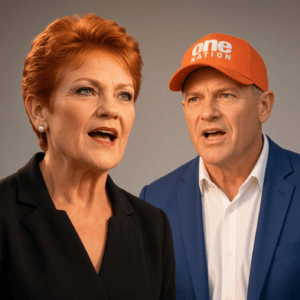
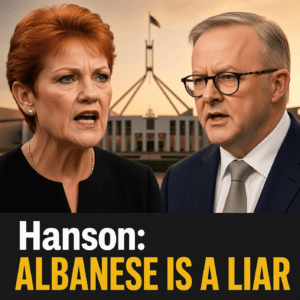
Pauline Hanson has escalated her long-running war with sections of the Australian media, shutting the ABC, The Guardian and The Age out of a Melbourne press conference as One Nation unveiled the team it hopes will shake up Victorian politics at the November state election.
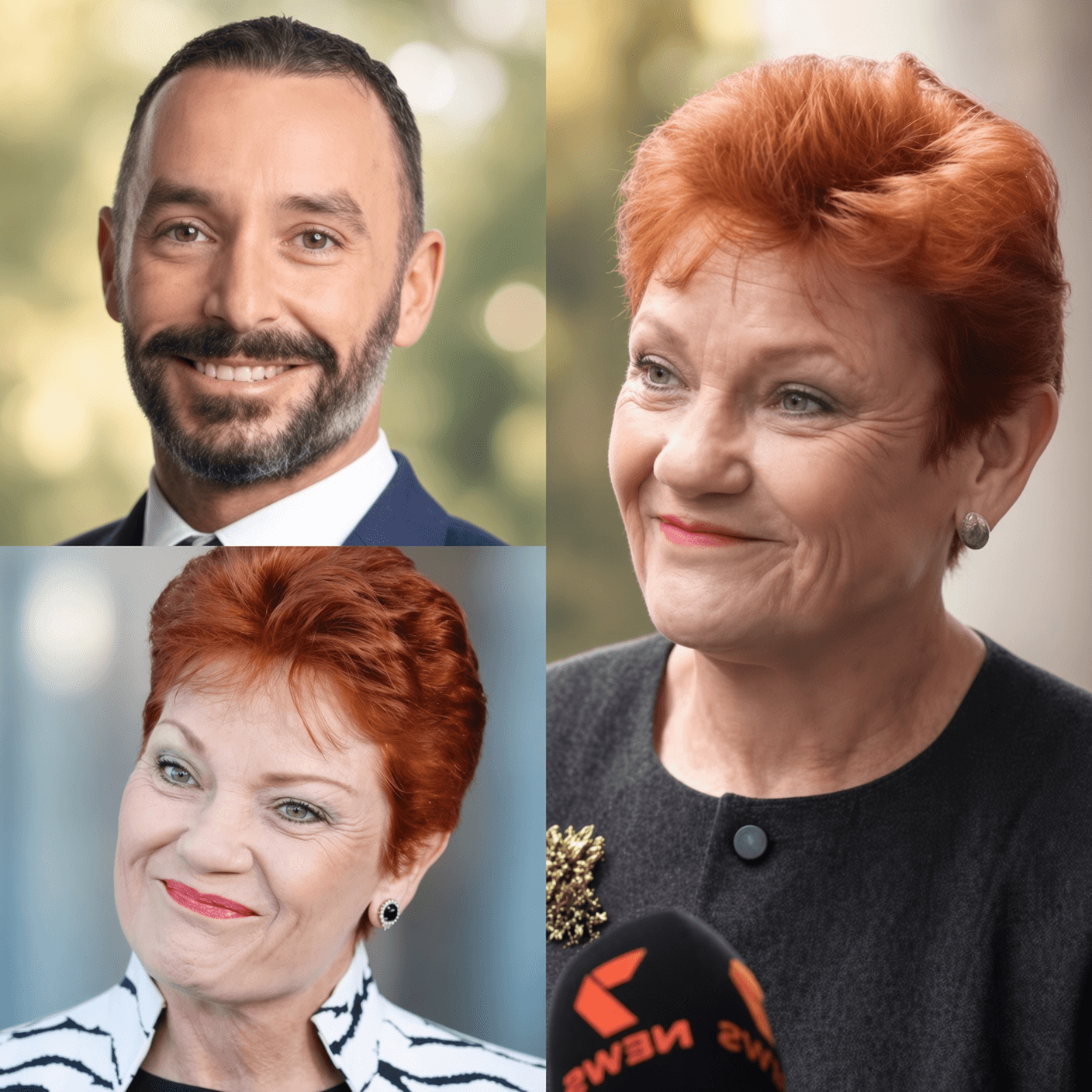
The One Nation leader made no attempt to soften her explanation for excluding the outlets, accusing sections of the media of distorting the party’s positions and declaring that access would depend on what she regarded as fair treatment.
“I am not putting up with their rubbish, I am not putting up with their spin, their lies whatsoever,” Hanson said.
“I want truth and honesty, you get it from me, I expect it from the media.”
The decision immediately threatened to overshadow what was intended to be a significant moment in One Nation’s Victorian campaign: the unveiling of Warren Pickering as the party’s state leader and the announcement of a slate of candidates ahead of an election in which the minor party believes it can become a serious force.
But the media ban also raised a larger question for Hanson as One Nation attempts to move from insurgent political movement to a party seeking substantial parliamentary power.
Can a party demanding greater influence over government simultaneously decide which major news organisations are entitled to scrutinise it?
Three major outlets excluded
Initial accounts of the dispute focused on the ABC and The Guardian, but subsequent reporting established that journalists from The Age were also excluded from the Melbourne event.
Reporters from the ABC, The Guardian and The Age were not given the time and location of the press conference in advance, while other media organisations were able to attend.
Hanson defended the arrangement when challenged over whether excluding journalists was compatible with democratic scrutiny.
She has repeatedly argued that particular outlets do not give One Nation a “fair go”, and her latest move represents a more formal extension of that position.
“You give me a fair go, I’ll give you a fair go back,” Hanson said, before singling out the national broadcaster.
“The ABC never does.”
Pickering also defended the party’s willingness to confront media coverage it considers inaccurate.
He said One Nation welcomed legitimate scrutiny of its candidates and policies but warned that what the party regarded as false attacks on candidates could trigger legal action.
“We expect, invite, and welcome a healthy level of scrutiny of our candidates and policy positions,” Pickering said.
“However, any blatant character assassination of our candidates based on falsehoods will be met with swift legal action.”
The distinction is central to One Nation’s defence of the ban. The party argues that it is not rejecting scrutiny itself, but refusing access to organisations it believes have repeatedly treated it unfairly.
Critics see the same decision very differently: as a political party selecting which journalists are permitted to question it and which are not.
A long-running fight with the media
Hanson’s hostility towards parts of the Australian media is hardly new.
As far back as 2016, after returning to federal politics, she warned journalists that outlets she believed denied her a fair hearing should not expect continued access.
Her relationship with the ABC has been particularly combative.
In 2019, Hanson accused the broadcaster of participating in a political attack against One Nation after the ABC aired an Al Jazeera investigation involving party officials James Ashby and Steve Dickson and their discussions with American gun lobby figures.
The ABC defended the broadcast at the time as being in the public interest.
More recently, tensions between Hanson and journalists intensified during her renewed rise in national polling and the increasingly aggressive media scrutiny accompanying it.
The latest exclusion therefore did not emerge from nowhere. It is the culmination of a strategy Hanson has telegraphed for years: access is not automatic, and outlets she believes are hostile should not assume they will receive the same treatment as those she regards as fair.
That strategy carries greater consequences now because One Nation’s political position has changed.
A minor party attracting occasional protest votes can operate largely through sympathetic broadcasters, social media and direct communication with supporters.
A party seeking significant representation — and potentially influence over who governs — faces a much broader expectation of accountability.
Warren Pickering takes the Victorian leadership
Behind the media confrontation was a significant organisational announcement for One Nation.
Warren Pickering, 43, has been elevated from Victorian state president to become the party’s state leader for the November election.
Pickering is an Army veteran and has been one of the central figures behind One Nation’s attempt to build a larger Victorian operation.
He previously attracted attention for leaving his employment amid disputes surrounding COVID-era policies.
Hanson praised his performance as state president and said she believed he could lead the expanding Victorian team effectively.
There was also an important change to his electoral path after the initial candidate announcement.
Pickering had initially been associated with an upper-house run but was shifted to contest the lower-house electorate of Pakenham.
That matters because a party’s parliamentary leader ordinarily needs a viable pathway into the Legislative Assembly if the organisation has ambitions beyond holding crossbench seats in the upper house.
Pakenham is also an intriguing target.
Labor held the electorate narrowly after the 2022 election, making it the kind of outer-suburban seat where dissatisfaction with the major parties could potentially create an opening for One Nation.
The decision to put Pickering there therefore gives the party’s Victorian leader a direct lower-house contest rather than a comparatively protected position on an upper-house ticket.
One Nation builds its Victorian ticket
The party also unveiled a broader group of candidates spanning politics, law, business and local government.
Rikkie-Lee Tyrrell remains the most electorally significant name in the group.
The Shepparton-based MP became One Nation’s first representative elected to the Victorian Parliament in 2022 and is seeking to retain a place in the Legislative Council.
Her presence gives the party something it lacked going into the previous election: an incumbent Victorian parliamentarian and an established parliamentary foothold.
Another prominent recruit is Colleen Harkin, an education commentator and former Liberal Party member.
Harkin’s departure from the Liberals followed bitter internal disputes and litigation connected with the financial fallout from former opposition leader John Pesutto’s defamation battle with Moira Deeming.
Other announced candidates include Natalie Adams, Fiona Lopez, Chris Burson, Aaron Sandford and Mark Nicholson.
Hanson has said this is only the beginning.
One Nation intends to field candidates across the state, dramatically expanding its Victorian presence compared with previous elections.
“We’ll be running candidates in every seat at this election,” Hanson said.
That is an ambitious organisational undertaking for a party that has historically had a much weaker infrastructure in Victoria than in Queensland or parts of regional Australia.
Why Victoria suddenly matters to One Nation
For much of its history, Victoria has not been One Nation’s natural stronghold.
The party’s strongest support has traditionally been associated with Queensland and regional electorates elsewhere in the country.
But the political environment entering the 2026 Victorian election is unusually unsettled.
Labor is seeking another term after 12 consecutive years in office, while the Liberal-National Coalition is attempting to convert dissatisfaction with the government into the 16-seat net gain required for majority government.
At the same time, One Nation has been benefiting nationally from disillusionment with both major parties.
Recent federal polling has put the party at levels that would once have been almost unimaginable, while Victorian polling has also shown it attracting a substantial minority of the primary vote.
The precise numbers vary considerably between pollsters, making it unwise to treat any individual survey as a prediction of the November result.
What is no longer seriously disputed, however, is that One Nation enters this Victorian campaign with substantially more support and attention than it had four years ago.
That creates potential complications for both major blocs.
In lower-house contests, One Nation preferences could help determine whether Labor or the Coalition wins marginal seats.
In the Legislative Council, a strong statewide vote could give the party a considerably larger crossbench presence and influence over the passage of legislation.
And if neither Labor nor the Coalition secures a majority in the Legislative Assembly, minor-party and independent MPs could suddenly become central to the formation and survival of government.
Crime, housing and corruption in Hanson’s sights
Hanson has indicated that One Nation will campaign heavily on issues it believes have created widespread frustration with the Victorian government.
She has pointed to violent crime, housing pressures, infrastructure problems and allegations of corruption involving unions and the construction sector.
The party has also foreshadowed education reforms and scrutiny of major infrastructure spending, including questions surrounding the Suburban Rail Loop.
One Nation has advocated a royal commission into corruption in the construction industry as part of its Victorian agenda.
At the candidate launch, however, the party had relatively little detailed policy ready for public examination.
Hanson indicated more announcements would come as the campaign developed.
That makes media access more consequential, not less.
As One Nation moves from broad criticism of the government towards detailed election commitments, journalists will increasingly be asking what its promises cost, how they would operate and whether the numbers behind them withstand scrutiny.
The same standard applies to Labor, the Coalition, the Greens and every other party asking Victorians for their vote.
The argument over who gets access
There is an important distinction between criticising Hanson for excluding journalists and suggesting politicians are legally required to invite every media organisation to every party event.
Political parties routinely control invitations to private functions, campaign events and media opportunities.
They also decide which interview requests to accept and which broadcasters receive particular appearances.
What makes the One Nation decision noteworthy is its scale and explicit justification.
The ABC is Australia’s national broadcaster. The Age is one of Melbourne’s major newspapers. Guardian Australia is a substantial national digital publication.
Excluding all three is therefore not equivalent to declining an interview request from an individual reporter.
It creates a deliberate division between media organisations One Nation considers acceptable and those it does not.
Supporters of Hanson’s approach argue politicians should not be compelled to cooperate indefinitely with outlets they believe misrepresent them, particularly in an era when parties can communicate directly with voters through social media.
Critics argue the approach creates a dangerous incentive: report favourably and retain access; scrutinise too aggressively and risk exclusion.
Media freedom advocates have consequently argued that political leaders seeking public power should face questions from journalists they dislike as well as those they trust.
The dispute is especially striking because One Nation itself places considerable emphasis on freedom of speech and opposition to institutional censorship.
Hanson’s response is that freedom of speech does not require her party to provide privileged access to organisations she believes have acted dishonestly.
The ban may become part of the campaign itself
There is also an obvious political calculation behind the confrontation.
Hanson has built much of her career around conflict with institutions she portrays as dismissive of ordinary Australians.
The media — particularly the ABC — fits naturally into that argument.
A confrontation with journalists can therefore reinforce rather than undermine her political message among supporters who already distrust mainstream news organisations.
It allows Hanson to position herself as refusing to play by the rules of an establishment she says is hostile to One Nation and its voters.
But the strategy has risks as the party grows.
It is easier to campaign against institutions than to govern them.
If One Nation wants Victorians to consider its candidates as potential ministers, parliamentary powerbrokers or serious legislators, voters may expect those candidates to answer difficult questions from unsympathetic interviewers.
Pickering’s emergence as state leader makes that test particularly important.
He is no longer simply a party organiser. He is now being presented as the public face of an alternative political force in Victoria.
That means his previous statements, policy positions and political judgment will receive far greater scrutiny.
Indeed, within days of his elevation, past comments about immigration, deportation policy and political candidates were already receiving renewed attention.
From protest party to contender
The central story behind the Melbourne press conference is therefore larger than Hanson’s latest fight with journalists.
One Nation is attempting a transition.
For decades, the party has thrived as an outsider movement whose political strength often came from attacking the institutions surrounding government rather than operating them.
Its current polling has created a different possibility.
It may now win enough support to exercise substantial influence over parliaments, legislation and potentially the formation of governments.
Victoria will provide one of the clearest tests yet of whether One Nation can make that transition.
Hanson believes voters are fed up with Labor after more than a decade in office and unconvinced that the Coalition offers a strong enough alternative.
“Victorians are crying out for change, and for leadership which puts their interests first,” she said.
The party will now attempt to convert that dissatisfaction into seats.
Its candidates will have to persuade voters that One Nation offers more than anger at the status quo. They will need detailed policies, credible candidates and answers to questions about how they would use political power.
That is why the argument over the Melbourne press conference matters.
Hanson has made her position unmistakable: media organisations she believes have treated One Nation unfairly should not assume they will continue receiving access.
Her critics believe the opposite principle should apply — that the more political power a party seeks, the more scrutiny it should be prepared to endure.
Victorian voters will ultimately decide whether Hanson’s confrontation with the press looks like a politician demanding accountability from journalists, or a party increasingly unwilling to accept scrutiny it cannot control.
Either way, the media ban ensured One Nation’s Victorian campaign began exactly where Hanson is often most comfortable: at the centre of a political fight.