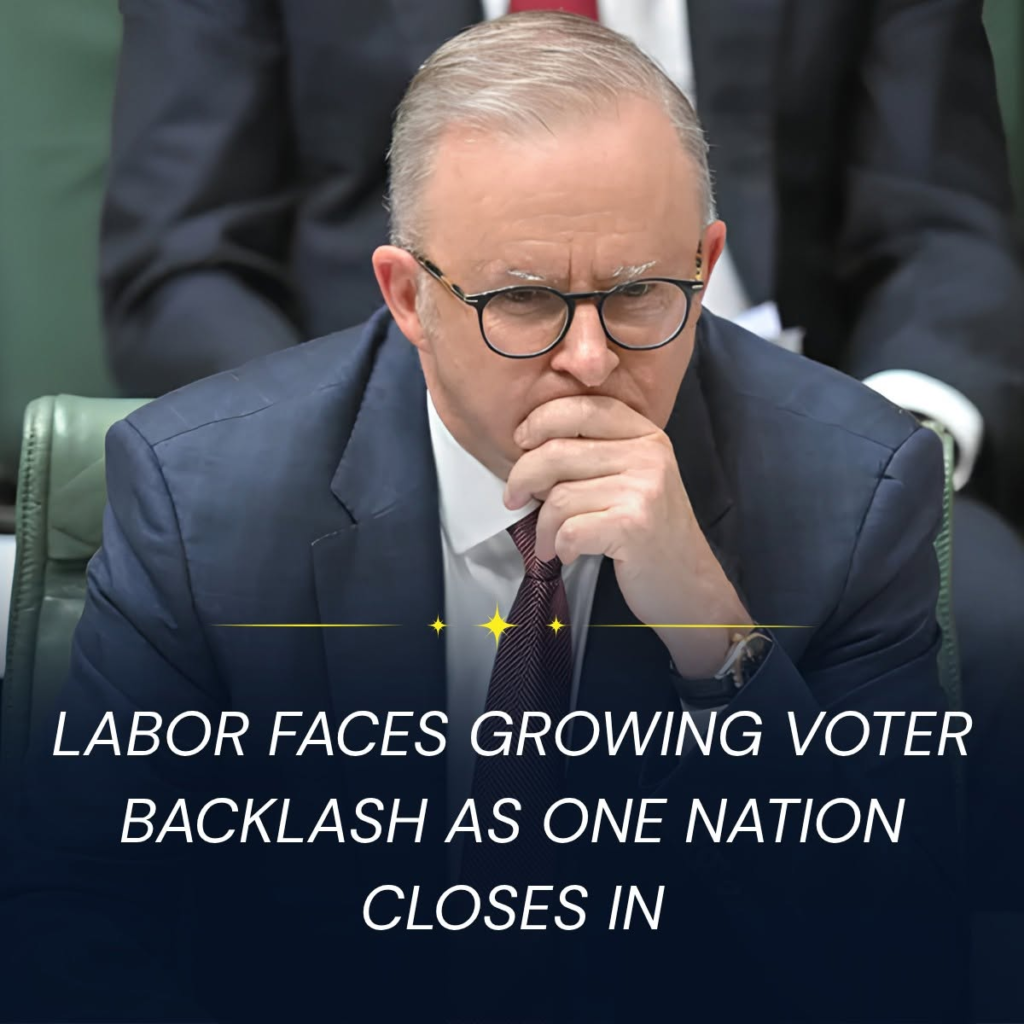
Pressure Mounts on Albanese as Polls Show One Nation Closing the Gap Amid Cost-of-Living Concerns
Australian Prime Minister Anthony Albanese is facing renewed political scrutiny as recent opinion polls reveal strong support for Pauline Hanson’s One Nation, while economic pressures continue to shape the national debate.
The latest figures suggest that Labor remains competitive but faces a challenging political environment. One Nation has recorded primary-vote results close to those of the governing party in several surveys, raising questions about voter dissatisfaction, the changing political landscape and the government’s ability to convince households that its economic policies are delivering meaningful results.
However, the polls do not tell a single, uniform story. Results differ between polling organisations, and the distinction between primary-vote support and two-party-preferred estimates remains important when assessing the broader electoral picture.
One Nation Challenges Labor in Recent Polls
A Newspoll conducted from October 5 to 8, 2026, found Labor on 29 per cent of the primary vote, compared with 28 per cent for One Nation. The Coalition recorded 20 per cent, while the Greens received 14 per cent. The survey included 1,241 respondents.
The result places Hanson’s party close to Labor in primary-vote terms, highlighting a significant development in a political environment traditionally dominated by Labor and the Liberal–National Coalition.
A separate Roy Morgan survey, conducted between September 28 and October 11, produced a different result. Labor recorded 26 per cent of the primary vote, while One Nation received 24 per cent. The Coalition stood at 21.5 per cent, and the Greens recorded 15 per cent. The poll surveyed 2,655 Australians.
Although the figures differ, both surveys show One Nation attracting substantial support at a time when the major parties are competing for voters concerned about economic conditions and the direction of national policy.
The variation also illustrates why individual polls should not be treated as definitive predictions. Survey dates, sample sizes, methodologies and changes in voter preferences can all affect the results.
Why the Cost of Living Remains Central
Economic conditions are likely to remain a major influence on political sentiment as Australians contend with higher everyday expenses and uncertainty about household finances.
Inflation, interest rates, housing affordability, energy costs and grocery prices have become important measures by which voters assess government performance. For households managing mortgages, rent and essential bills, national economic announcements may carry less weight than the immediate effect on weekly budgets.
Recent economic data have added to the pressure. Australia’s annual inflation rate reached 4 per cent in the year to August 2026, according to figures cited in Roy Morgan’s latest polling release. The Reserve Bank of Australia also raised its cash rate to 4.6 per cent, increasing concerns about borrowing costs and the financial pressure facing households.
These conditions create a difficult environment for any government seeking to demonstrate that its economic policies are working. Even when employment remains comparatively resilient, persistent price increases can leave voters dissatisfied with their financial circumstances.
For Labor, the challenge is not simply to point to national economic indicators. It must also persuade households that its decisions will improve living standards and provide greater financial security.
Hanson’s Appeal and the Changing Political Landscape
One Nation’s polling performance suggests that the party is attracting voters who are dissatisfied with the established political options. Hanson has built her political profile around immigration restrictions, national identity, criticism of government spending and opposition to several climate and energy policies.
These positions provide the party with a distinct message at a time when voters are questioning the direction of economic and social policy.
The party’s support also creates a challenge for the Coalition. With the Liberals and Nationals competing for conservative voters, One Nation’s results raise questions about how opposition parties can distinguish themselves while addressing similar concerns about immigration, energy prices and government accountability.
Nevertheless, primary-vote figures do not automatically translate into parliamentary seats. The eventual distribution of seats depends on local contests, candidate performance and how preferences flow between parties.
Roy Morgan’s October survey estimated that Labor would retain a lead over both One Nation and the Liberal–National Coalition on two-party-preferred measures. In a hypothetical Labor-versus-One Nation contest, the poll estimated a 54.5 per cent share for Labor and 45.5 per cent for One Nation after allocating preferences.
That distinction is important: strong primary-vote support for Hanson indicates a competitive political environment, but it does not by itself establish that One Nation would win a federal election.
Albanese Rejects Claims That Labor Should Fear One Nation
The prime minister has publicly rejected suggestions that the rise of One Nation has left Labor unable to compete. In an interview reported by the ABC on October 13, Albanese argued that his political opponents were competing at the fringes, while Treasurer Jim Chalmers cautioned against dismissing the concerns of One Nation supporters.
Chalmers said Labor needed to demonstrate that it understood voter frustration and could deliver meaningful economic improvements.
That response reflects a broader challenge for the government. Dismissing dissatisfied voters risks reinforcing their belief that established political leaders are disconnected from everyday concerns. Acknowledging those concerns, however, does not necessarily mean accepting the policies proposed by Hanson or her party.
Labor must therefore address the issues driving dissatisfaction while explaining how its own economic and social policies differ from those of its opponents.
For the Coalition, the rise of One Nation presents a separate strategic problem. It must compete for voters seeking a tougher approach to immigration and government spending while maintaining a credible alternative on economic management and public services.
Polling Is a Warning Sign, Not an Election Result
The recent surveys provide evidence of a competitive political environment, but they should be interpreted with care.
Primary-vote figures measure the proportion of respondents who initially support each party. They do not directly determine the final distribution of parliamentary seats, and they are not equivalent to two-party-preferred results.
Differences between polling organisations also matter. The October Newspoll placed Labor just one percentage point ahead of One Nation on primary votes, whereas Roy Morgan recorded a two-point gap. Neither result should be interpreted in isolation.
Polling averages can provide a broader view of public sentiment, but even averages remain snapshots of opinion at a particular time. Voters’ priorities, economic conditions, party leadership and campaign events can all change before an election.
The next federal election is not scheduled until 2028 under the current parliamentary timetable, leaving considerable time for political circumstances to evolve.
The Test Facing the Government
For Albanese, the immediate task is to demonstrate that the government understands the pressures facing Australian households and can respond with policies that produce tangible results.
Economic management, housing affordability, energy policy and the cost of essential services are likely to remain central to that task. The government will also need to explain its decisions clearly and respond to criticism without treating voter dissatisfaction as merely a partisan problem.
For Hanson, maintaining strong polling support will require more than attracting voters frustrated with Labor and the Coalition. One Nation will also face scrutiny over the practicality, cost and likely consequences of its proposals.
The latest polls therefore point to a political contest in which voter concerns are reshaping the choices available to Australians. Labor remains ahead of One Nation in some surveys, while other results show the two parties separated by only a narrow margin.
The figures do not establish the outcome of the next election. They do, however, underline the importance of the economic debate and the need for political leaders to respond to the concerns influencing public opinion.
As households continue to confront financial pressures, the central question for all parties is whether their policies can deliver credible improvements in living standards. The answer will depend less on a single poll than on how voters assess the government’s performance and the alternatives offered by its opponents over the months and years ahead.