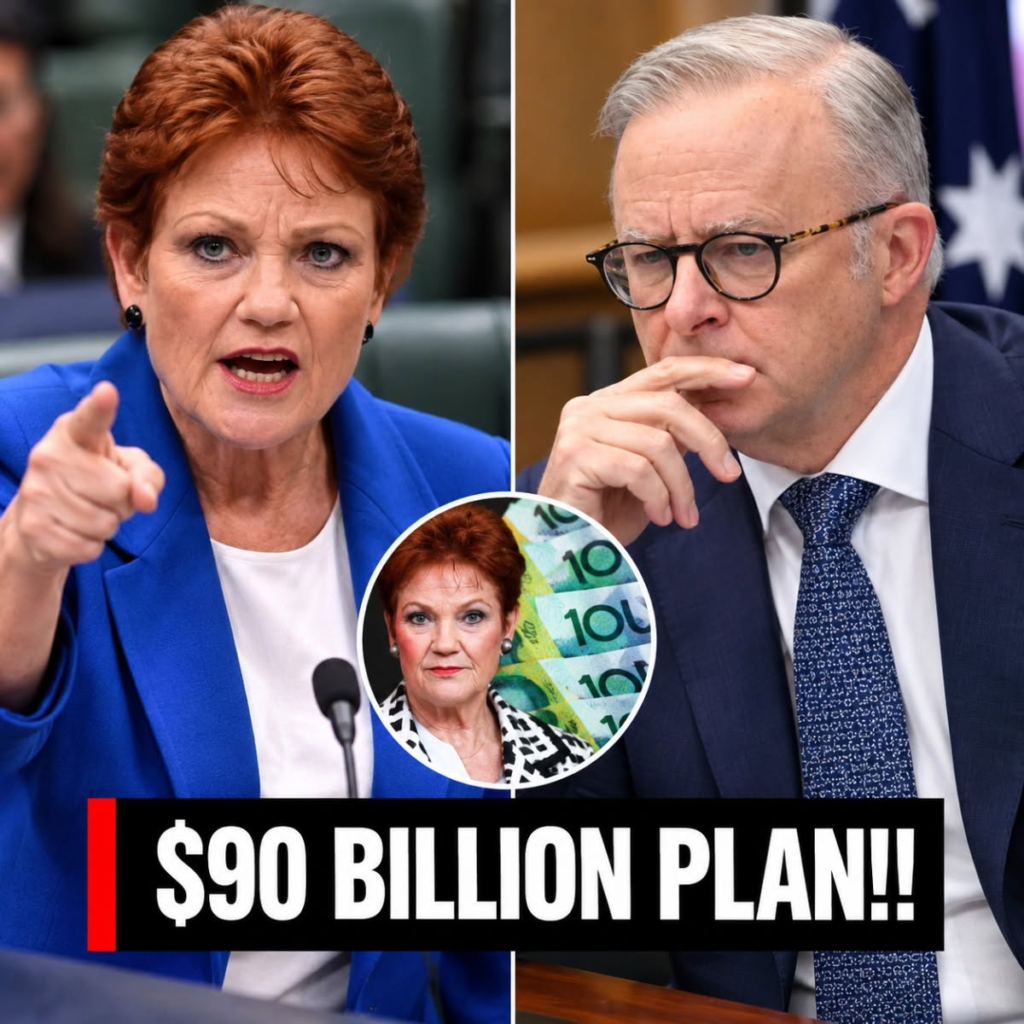
CANBERRA — Pauline Hanson’s One Nation is once again placing its $90 billion annual spending-cut plan at the heart of the national political conversation, as the party records a notable rise in support amid ongoing cost-of-living pressures.
The proposal centres on major reductions in Commonwealth outlays. These include abolishing the Department of Climate Change, reforming and tightening expenditure within the NDIS, cutting foreign aid, and withdrawing Australia from international bodies such as the United Nations and the World Health Organisation. Hanson has also previously identified the World Economic Forum as an organisation from which she wants Australia to disengage.
One Nation claims the package could generate savings of up to $90 billion each year. The party says those funds would be redirected toward debt reduction, tax relief and significant infrastructure projects, including new dams, rail links and regional development works.
Energy policy forms another core element of the platform. One Nation supports expanding coal-fired generation, ending net-zero targets and developing nuclear and hydro power. Hanson has argued these steps would lower household electricity bills. An ABC analysis has noted the party’s claim that energy prices could fall by around 20 per cent, while details on the exact timeframe and delivery mechanism remain limited.
The political context has shifted. Recent Newspoll figures from late September 2026 placed One Nation’s national primary vote near 30–31 per cent, with particularly strong results in Queensland and New South Wales. The quarterly survey covered almost 5,000 voters between July and September.
The policies continue to attract strong debate. One Nation presents the program as a direct attack on government waste and a means of returning more money to Australian households. Critics challenge aspects of its climate, energy and spending approach.
What is clear is that Hanson’s $90 billion agenda, first outlined in 2025, has returned to the centre of Australia’s fast-changing political landscape.