Albanese and Burke Heckled at Lakemba Mosque as Eid Gathering Highlights Community Tensions
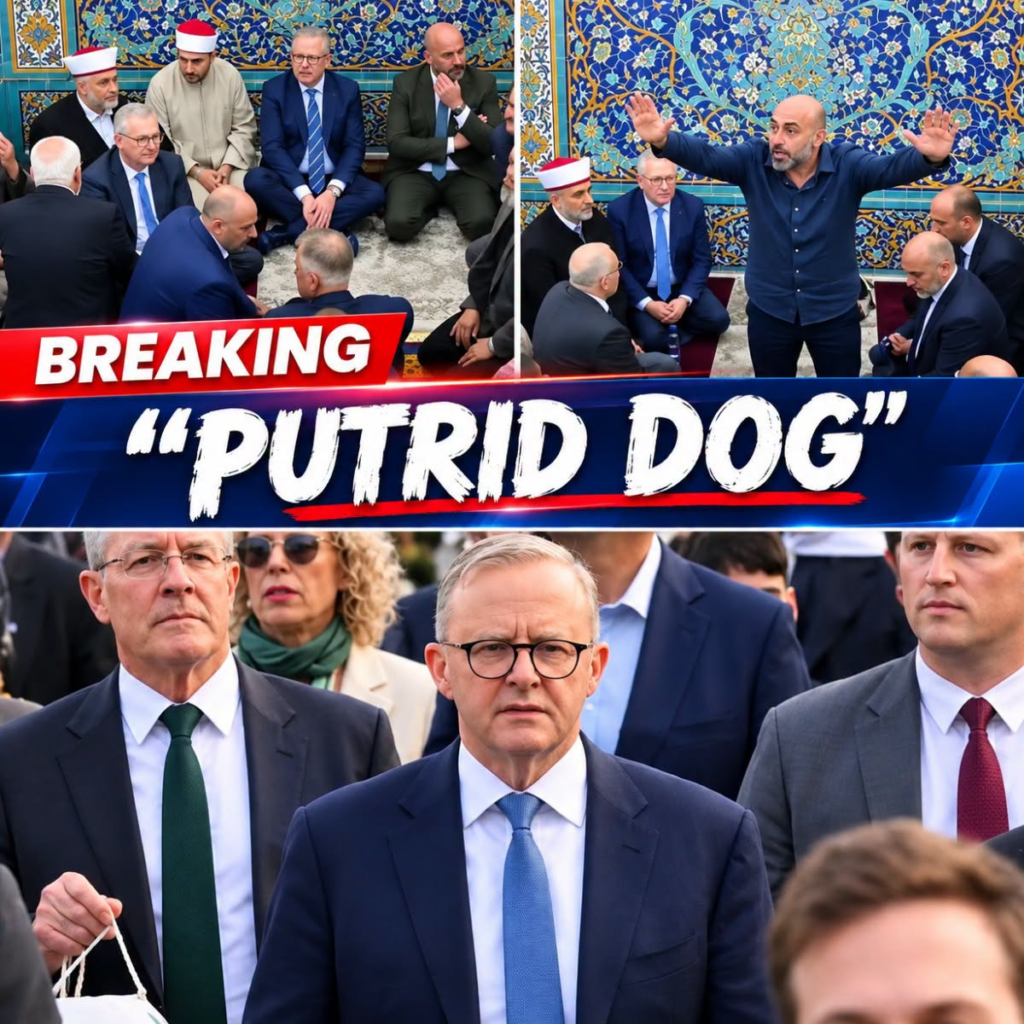
Prime Minister Anthony Albanese and Home Affairs Minister Tony Burke faced vocal criticism from a small number of attendees during Eid al-Fitr prayers at Lakemba Mosque in western Sydney on 20 March 2026. The incident disrupted a gathering marking the end of Ramadan and brought renewed attention to tensions between sections of Australia’s Muslim community and the federal government.
Videos and eyewitness accounts reported by Australian media showed several people shouting at the two politicians while they were seated inside the mosque. Some protesters called them a “disgrace” and accused them of supporting genocide, while others demanded that they leave. The remarks reflected anger over the government’s position on the conflict in the Middle East, particularly the situation in Gaza and Lebanon.
Despite the interruptions, the gathering continued. Organisers appealed for calm, and Albanese and Burke remained at the event until the address to worshippers had concluded. Reports described the disturbance as involving a small group rather than the entire congregation, which included thousands of people attending the religious celebration.
Albanese Says the Overall Reception Was Positive
Responding to questions afterward, Albanese sought to place the confrontation in context. He said the event had attracted more than 30,000 people and described the overall reception as “incredibly positive”, arguing that the actions of a few individuals should not define the wider gathering.
The prime minister also rejected suggestions that he had been forced out of the mosque. According to his account, the heckling was addressed by members of the community, and he and Burke remained seated while the situation was handled.
The contrast between the visible confrontation and Albanese’s description of the broader reception became an important part of the subsequent debate. While footage of the heckling circulated widely, it did not establish that all, or even most, attendees shared the protesters’ views.
The incident nevertheless demonstrated the difficulties political leaders can face when visiting communities that have serious disagreements with government policy. Public appearances at religious events may provide opportunities for dialogue, but they can also become settings in which frustration is expressed directly to elected representatives.
Anger Over Gaza and Lebanon
The criticism directed at Albanese and Burke came amid continuing concern within parts of Australia’s Muslim community over the government’s response to the wars in Gaza and Lebanon.
For some attendees, the politicians’ presence at Eid prayers offered an opportunity to challenge them over decisions and statements concerning the Middle East. The accusations shouted during the gathering were expressions of political anger, rather than established findings about the ministers’ conduct.
The Lebanese Muslim Association, which operates Lakemba Mosque, acknowledged that emotions were running high because of the suffering of civilians in the region. The organisation defended its decision to invite the prime minister, explaining that engagement with government representatives was important even when community members strongly disagreed with their policies.
Its position reflected a broader question facing community organisations: whether inviting political leaders into religious spaces helps maintain communication or risks alienating people who feel their concerns have not been adequately addressed.
The association said it would continue to welcome political leaders to the mosque. Its leadership argued that access to government representatives was necessary for communities seeking to communicate their concerns and pursue change.
Disagreement Over the Government’s Security Policies
Albanese also suggested that some of the anger might be connected to the government’s actions against organisations it considers extremist. He referred to legislation targeting groups including Hizb ut-Tahrir, linking the measures to the reaction from some attendees.
That explanation was contested. Reporting by The Guardian noted that the connection between the protesters’ remarks and the government’s action against the organisation was not clearly established by the footage of the incident. The protesters’ stated anger over the Middle East therefore remains an important part of the available account.
The distinction matters because the confrontation involved several overlapping political issues. Australia’s approach to the Middle East, domestic community relations and national security policy all formed part of the wider debate, but the available evidence does not demonstrate that every protester was motivated by the same concern.
For the government, the challenge is to explain its decisions while responding to communities that may feel particularly affected by international developments. For critics, the visit provided a public opportunity to demand answers directly from senior ministers.
A Sensitive Moment for Community Relations
The Lakemba incident also took place against a backdrop of security concerns surrounding the mosque. In February 2026, Reuters reported that police were investigating a threatening letter sent to the institution, following earlier threats. The mosque’s leadership had raised concerns about the safety of worshippers and requested additional security support.
These circumstances underline why maintaining a distinction between peaceful political protest and threats or intimidation is important. Attendees have the right to express disagreement with public officials, while religious gatherings also depend on the ability of worshippers to participate without fear or disruption.
The heckling at Eid prayers was not the first time Australian politicians had encountered protests at Muslim community events. Similar tensions had emerged around previous Ramadan gatherings, including an event Burke did not address in March 2025 after concerns about a planned protest.
The latest confrontation therefore formed part of a continuing debate about political representation, religious institutions and the relationship between government policy and community confidence.
What the Incident Means for Albanese and Burke
For Albanese, the episode presented a public reminder that the government’s decisions on international affairs can have consequences for domestic political relationships. For Burke, whose electorate includes Lakemba, the confrontation carried an additional local dimension.
However, a single incident cannot establish the views of an entire religious community or demonstrate a nationwide shift in political support. The event involved a small number of vocal critics within a much larger gathering, and the mosque’s leadership continued to defend engagement with elected officials.
The longer-term question is whether dialogue between government representatives and community organisations can address disagreements without allowing them to deepen mistrust. That will depend on subsequent engagement, the government’s policy decisions and the willingness of political leaders to respond to concerns raised by affected communities.
The scenes at Lakemba Mosque drew attention because they unfolded during a major religious celebration. Yet beyond the dramatic footage, the central issue remains a difficult one: how elected leaders can maintain meaningful contact with communities whose members may strongly oppose their policies, while preserving space for respectful debate and religious observance.