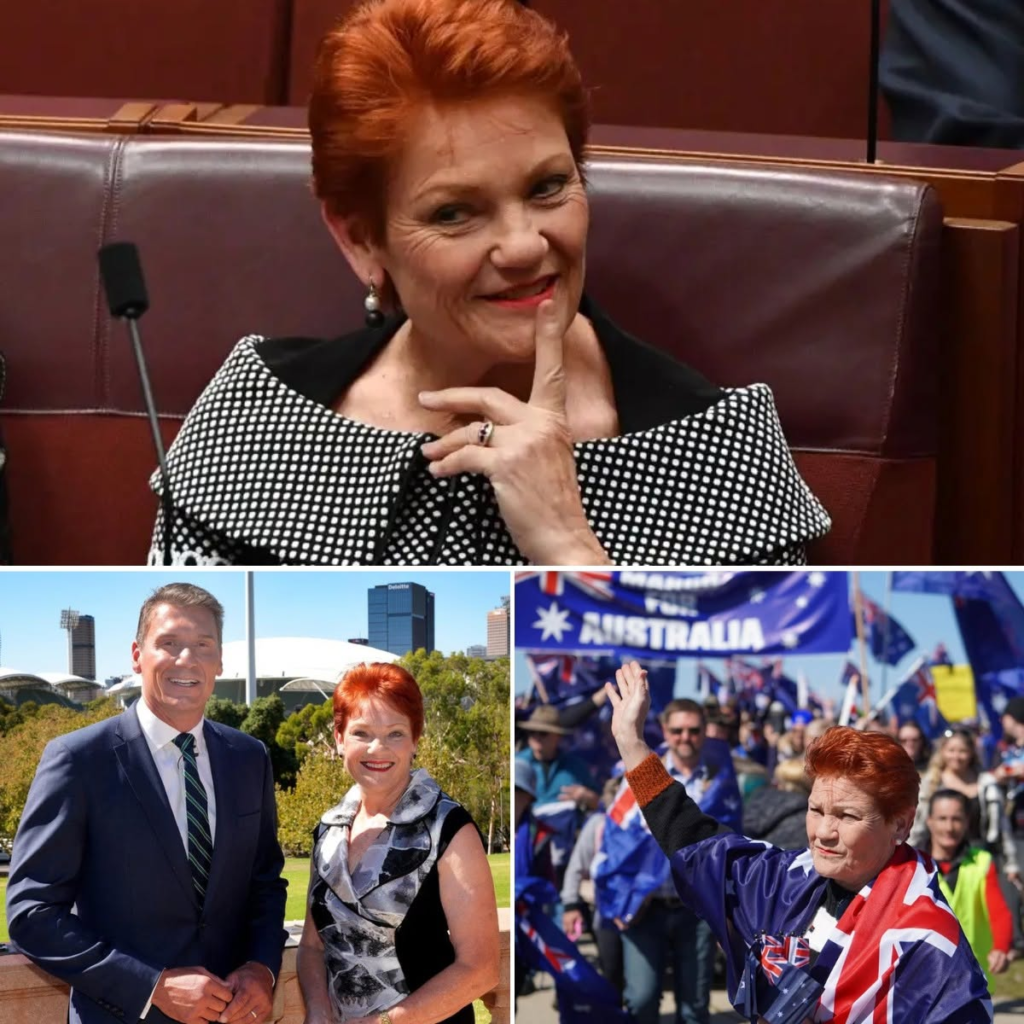
Australia’s migration debate has entered another explosive phase after Pauline Hanson and One Nation unveiled a sweeping proposal to drastically reduce migration, tighten visa rules and temporarily push net overseas migration to zero.
The proposal comes as immigration has become one of the country’s most politically sensitive issues, with housing affordability, population growth, infrastructure and access to workers all feeding into an increasingly heated national argument.
But behind the dramatic headlines is a policy package considerably more specific — and complicated — than simply “zero migration”.
One Nation’s latest plan proposes cutting more than 750,000 temporary migrants over three years, reducing net overseas migration to zero during that period before moving toward a cap of 130,000 a year. The party says the objective is to ease pressure on housing, hospitals, infrastructure and public services.
Hanson has repeatedly argued that Australia has expanded its population faster than its infrastructure can cope. In August, she said One Nation would cap permanent migration at 130,000 and review the figure annually, arguing that Australians struggling to find affordable housing deserved greater priority.
The proposal would target several categories of temporary migration, including international students and graduates, while imposing tougher conditions on skilled migration and family sponsorship. The plan also includes measures aimed at visa overstayers and people working illegally.
And this is where the controversy becomes much larger than a simple argument over numbers.
Hanson is connecting migration directly to the cost of living and housing crisis, arguing that rapid population growth increases demand for homes and public infrastructure. One Nation has also argued that reducing migration would give governments more time to expand housing supply and essential services.
That argument is now colliding with a very different concern from employers, universities and regional industries: who would fill the jobs if migration were cut so dramatically?
Agriculture, aged care, construction, healthcare and other industries rely heavily on migrant workers. Critics of the One Nation proposal have warned that removing large numbers of temporary migrants could create serious labour shortages, particularly outside Australia’s major cities.
Former senior immigration official Abul Rizvi has gone further, warning that implementing the proposal could cost the government many billions of dollars because of enforcement, detention, legal proceedings and the practical costs associated with removing large numbers of people.
Universities are also watching the proposal closely. International education is a major Australian export industry, and the proposed restrictions on international students could have consequences extending beyond migration numbers themselves. Reuters reported that international education was worth approximately A$53.6 billion and that education leaders had warned tighter restrictions could damage the sector.


Yet the political timing could hardly be more significant.
On September 17, the Albanese government announced its own new migration measures, targeting visa overstayers, international students and working-holiday makers. The government plans to reduce net overseas migration to 245,000 in the current financial year and 225,000 by 2027–28, down from about 292,100 in the year to March.
The contrast is striking.
Labor is proposing a substantial reduction while maintaining migration at levels it considers compatible with economic needs. One Nation is arguing for a much sharper reset, beginning with zero net overseas migration and eventually moving toward a 130,000 cap.
Home Affairs Minister Tony Burke has defended the government’s approach, arguing that migration needs to be managed according to Australia’s economic requirements rather than reduced simply because of political pressure. Business groups have also warned that excessive cuts could worsen existing skills shortages.
That difference has put Hanson at the centre of a national argument over what Australia should look like in the coming decade.
Her position has been building for months.
In June, Hanson used her first National Press Club address to declare that Australia should be a “monocultural” society rather than a multicultural one. She argued that high migration had contributed to pressure on housing and national identity, while also calling for tighter restrictions connected to extremism and immigration.
The speech immediately generated controversy.
Reuters reported that Hanson linked immigration policy to housing costs and broader social tensions, while also advocating deportations and restrictions on some visa categories. Her comments about multiculturalism were strongly criticised by opponents, while her supporters presented them as an attempt to address issues they believed the major parties had avoided.
The polling picture explains why the speech attracted so much attention.
One Nation’s support rose sharply during the first half of 2026. Roy Morgan recorded the party at 31.5% primary support shortly after Hanson’s June National Press Club appearance, before support fell to 26% following scrutiny of her comments about “monoculturalism”.
Another Roy Morgan survey in July put One Nation at 28%, ahead of Labor on 27.5% and the Coalition on 20% in primary support. That poll covered 1,612 Australian electors and measured voting intentions rather than actual election results.
More recently, a Newspoll reported by The Australian put One Nation at 30% primary support, with Labor on 29% and the Coalition on 19%. Those figures illustrate the party’s unusually strong polling position in 2026, but they should not be interpreted as evidence of an election outcome or a guaranteed political realignment.
There is another important detail that often disappears beneath the sensational headlines: One Nation’s own migration policy has not always been communicated consistently.
The party’s official policy refers to a 130,000 cap, but questions have emerged over whether that figure refers to net overseas migration, permanent visas or another measure. Hanson has also said Pacific and regional labour programs would be treated differently because sectors such as agriculture and meat processing depend on those workers.
That distinction matters enormously.
Net overseas migration is not simply the number of visas issued. It reflects the difference between people arriving and people leaving under Australia’s statistical definition. Consequently, a particular visa ceiling does not automatically translate into an identical net migration figure.
The debate has therefore moved from a slogan — “zero migration” — into a much more technical question about exactly who would be allowed to enter Australia, for how long, under what visa, and how departures would be counted.
And the economic consequences remain heavily disputed.
One Nation argues that a substantial reduction would relieve pressure on housing and infrastructure. Critics argue that reducing the migrant workforce could make labour shortages worse, reduce economic activity and create additional pressure in industries already struggling to recruit.
Angus Taylor, the Coalition leader, has also attacked parts of One Nation’s broader economic agenda. ABC reported that he argued unfunded One Nation policies could significantly increase inflation, interest rates and government debt, although those calculations concern the party’s wider economic package rather than migration policy alone.
Hanson, meanwhile, has continued presenting migration reduction as part of a broader economic reset. Her argument is that slower population growth would allow housing and infrastructure to catch up, while resources currently required to accommodate rapid population growth could instead be directed toward Australians already living in the country.
Whether that calculation ultimately works depends on assumptions about labour supply, productivity, housing construction, government spending, tax revenue and population growth — precisely the areas where economists and political parties disagree.
There is also a major difference between reducing migration and stopping migration altogether.
Even One Nation’s current proposal does not amount to permanently closing Australia’s borders. The party’s stated position has evolved toward a temporary zero-net period followed by a 130,000 annual cap, while still maintaining selected pathways for workers considered economically necessary.
That evolution is significant because it shows the party is attempting to turn a long-standing political slogan into a more detailed policy framework.
But it has also created opportunities for opponents to question whether the proposal is financially and administratively realistic.
The timing has made the debate even more intense. Labor has now announced its own migration restrictions, including tighter controls on international students bringing family members, additional compliance officers, stronger action against overstayers and changes to working-holiday arrangements.
So Australia is now watching two very different approaches develop at the same time.
The Albanese government is seeking to lower migration while maintaining a substantial skilled intake aimed at areas such as healthcare, construction, education and agriculture.
One Nation is demanding a far more dramatic reduction and arguing that housing affordability and infrastructure pressure require a much deeper population reset.
Neither approach removes the underlying dilemma.
Australia needs workers.
Australia also needs housing.
It needs hospitals, schools, transport and infrastructure capable of supporting population growth.
And it must decide how much migration the economy and communities can absorb without creating pressures that governments struggle to manage.
That is why Hanson’s proposal has generated such intense debate.
The most consequential question may not be whether One Nation can make “zero migration” a headline.
It is whether the party can translate that headline into a workable policy that survives scrutiny over jobs, housing, government finances, regional labour shortages, universities and Australia’s long-term population needs.
For Hanson, the migration debate represents a major political opportunity to force the major parties to confront an issue that has become increasingly important to voters.
For her critics, it represents a policy experiment carrying potentially significant economic and social costs.
And with Labor already moving to tighten migration rules, one thing is becoming increasingly clear:
Australia’s migration debate is no longer a side issue. It has moved directly into the centre of the country’s political fight over housing, wages, infrastructure, identity and the future size of the population.
The next question is perhaps the most consequential one of all:
How far will Australia actually go — and how much of Hanson’s migration agenda will ultimately make it from political shockwave to government policy?