The Pay Gap Question: Anthony Albanese’s Salary Puts Political Remuneration Under Scrutiny
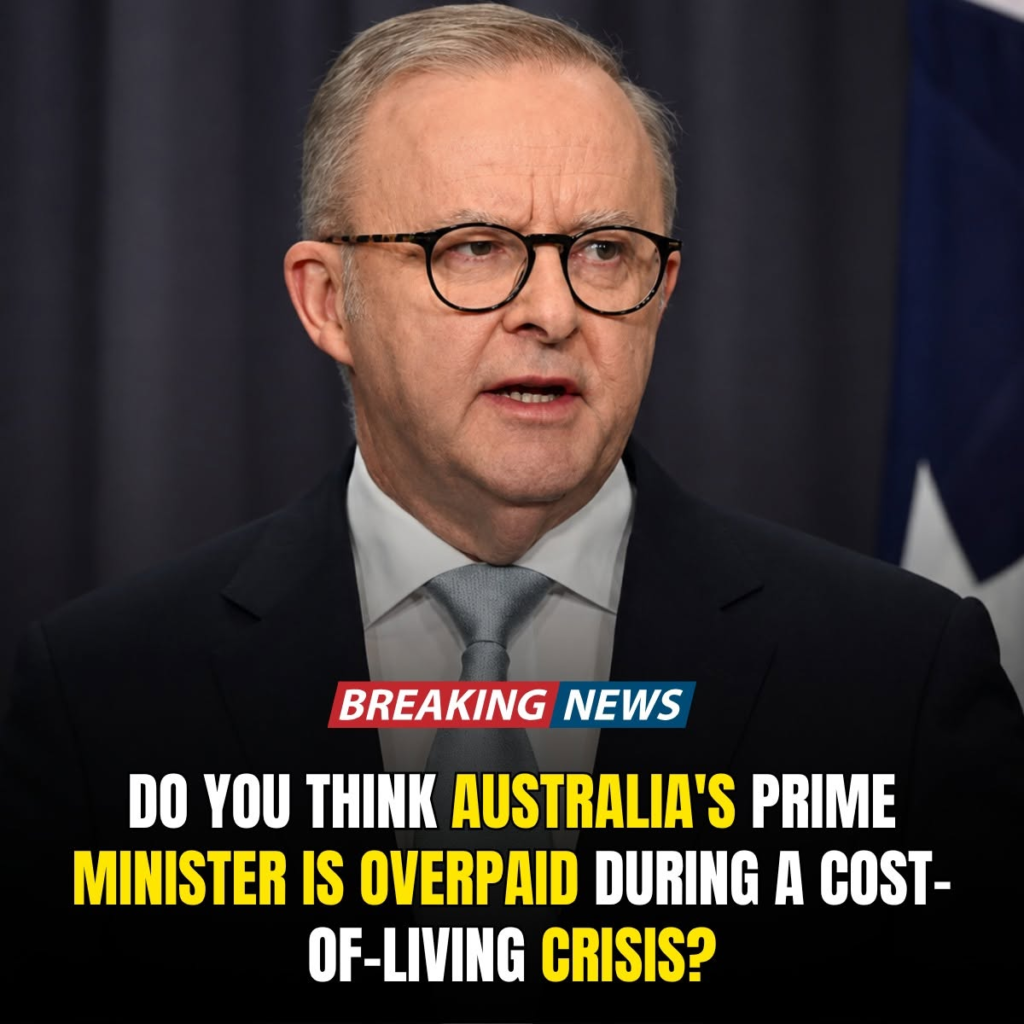
As Australians continue to navigate the cost of housing, groceries, energy and other everyday essentials, the salaries earned by the country’s political leaders remain a subject of public interest. At the centre of the discussion is Prime Minister Anthony Albanese, whose annual remuneration raises broader questions about political responsibility, income inequality and the financial pressures facing ordinary households.
For many Australians, the issue is not simply how much the prime minister earns. It is whether the remuneration of senior political figures adequately reflects the economic circumstances experienced by the people they represent. While some argue that leading a national government requires substantial compensation, others believe political salaries should be considered alongside the financial challenges confronting workers and families.
The debate highlights a wider question about the relationship between public service and public expectations: how should Australia balance the responsibilities of political leadership with the economic realities of everyday life?
How Much Does the Prime Minister Earn?
Australia’s federal parliamentary salaries are governed by a formal remuneration framework. Under the 2026 determination, the base annual salary for federal parliamentarians is set at $239,270. The prime minister receives an additional ministerial salary equivalent to 160 per cent of the parliamentary base salary, under the existing ministerial remuneration arrangements. Together, these components amount to approximately $622,102 annually before tax. The relevant framework is documented by the Australian Remuneration Tribunal and the federal government’s legislative register.
This figure represents salary rather than the total value of every resource associated with the office. Official duties can involve separately administered travel, staffing and other work-related arrangements. Those resources should not automatically be treated as personal income.
The prime minister’s remuneration is also not determined in isolation from the broader parliamentary system. Federal MPs receive a base salary, while ministers and certain parliamentary office-holders receive additional amounts reflecting their positions. The arrangements are designed to distinguish ordinary parliamentary duties from the additional responsibilities attached to senior offices.
Nevertheless, the size of the prime minister’s salary inevitably attracts attention because it is substantially higher than the earnings of most Australian workers.
Comparing Political Salaries With Ordinary Earnings

Figures published by the Australian Bureau of Statistics provide a useful point of comparison. In May 2026, average weekly ordinary-time earnings for full-time adult employees reached $2,083.70, seasonally adjusted. This represented annual growth of 3.7 per cent. Average weekly total earnings for all employees, including people working part-time, were $1,579.20.
These figures illustrate why comparisons between political salaries and household incomes remain relevant. Full-time workers and people employed in casual or part-time positions can experience very different financial circumstances, depending on their hours, wages, family responsibilities and location.
However, averages do not describe every household. Some workers earn considerably more than the national average, while others receive substantially less. Housing costs, mortgage repayments, childcare expenses and access to secure employment can also influence how much disposable income remains at the end of each month.
Consequently, the difference between the prime minister’s remuneration and average earnings is a starting point for discussion rather than a complete measure of economic inequality.
The Cost-of-Living Pressure Facing Households
For many families, the most immediate concern is the cumulative effect of everyday expenses. Housing remains a major component of household budgets, particularly for renters and people attempting to enter the property market. Food, transport, insurance, electricity and other essential services can place additional pressure on disposable income.
Even when wages rise, households may not necessarily feel financially better off if essential expenses increase at a similar or faster rate. The effect also varies between regions, occupations and family circumstances.
These pressures help explain why the remuneration of senior public officials can become a subject of wider debate. When people are making difficult decisions about household spending, the income received by political leaders may become a symbol of the perceived distance between government and the public.
That perception does not, by itself, establish that a particular salary is excessive or inappropriate. It does, however, help explain why transparency about remuneration and accountability for economic policy remain important elements of public discussion.
The Argument for Paying Political Leaders Appropriately
Supporters of substantial remuneration for the prime minister point to the scale and complexity of the position. The office involves responsibility for national policy, government coordination, international relations, economic management and responses to major domestic or international emergencies.
The prime minister must also make decisions affecting millions of people, work with Parliament and state and territory governments, and represent Australia internationally. The demands of the position extend beyond a conventional working schedule.
From this perspective, remuneration should reflect the responsibilities and expectations attached to the role. Competitive salaries may also be viewed as part of a broader effort to ensure that public office remains accessible to people with different professional backgrounds.
Supporters of this approach argue that salary decisions should follow established rules rather than being determined by short-term political pressure or public anger.
At the same time, recognising the responsibilities of the office does not remove the need for transparency. Australians can reasonably expect clear explanations of how salaries are calculated, which independent or government bodies oversee the arrangements, and how changes are justified.
Accountability and Public Expectations
Critics of high political salaries approach the question from a different perspective. They argue that elected officials should remain conscious of the financial circumstances facing the people they represent, particularly when households are experiencing pressure from housing and essential expenses.
For these critics, the issue is closely connected to trust in government. They may question whether salary increases are appropriate during periods when some workers are struggling to maintain their standard of living, or whether remuneration arrangements adequately reflect broader economic conditions.
Others may support an independent salary-setting process but still expect political leaders to explain their economic priorities and demonstrate that public resources are being managed responsibly.
These concerns should be distinguished from claims that a politician’s salary alone determines the effectiveness of a government. Remuneration and policy performance are separate questions. The level of a prime minister’s income does not, by itself, establish whether economic policies are successful or whether living standards are improving.
A meaningful assessment requires consideration of a wider range of evidence, including wage growth, inflation, employment, housing affordability and the distribution of economic gains across different groups.
Who Should Decide Political Pay?
Australia’s remuneration system provides a formal structure for setting parliamentary base salaries and additional payments for particular offices. The Remuneration Tribunal determines parliamentary base salaries and makes recommendations concerning ministerial salaries, while the government has a role in decisions on ministerial remuneration under the constitutional framework.
This arrangement seeks to provide a defined process rather than leaving every salary decision to an immediate political dispute.
However, the existence of a formal process does not eliminate public debate about the principles behind it. Questions remain about how remuneration should account for responsibility, economic conditions and public expectations.
Some people may prioritise independent decision-making and consistency across public offices. Others may place greater emphasis on restraint during periods of financial pressure. These perspectives reflect different views about how political responsibility should be recognised and how public confidence can be maintained.
A Debate That Extends Beyond One Salary
The discussion surrounding Anthony Albanese’s remuneration is part of a broader conversation about income differences, living standards and trust in political institutions.
The available figures establish the prime minister’s salary structure and provide a national earnings benchmark. They do not, on their own, settle the question of what an appropriate level of political remuneration should be.
That question involves both practical considerations and public values. It requires balancing the demands of high public office with the expectation that elected representatives remain attentive to the financial circumstances of ordinary Australians.
Ultimately, the debate is not only about the amount appearing on a salary statement. It is also about transparency, accountability and the relationship between political leadership and the people affected by government decisions.
As households continue to assess their budgets and governments face pressure to address affordability concerns, political remuneration is likely to remain a subject of discussion. The challenge is to ensure that the debate is informed by accurate figures, a clear understanding of the remuneration system and a balanced assessment of the responsibilities associated with public office.